
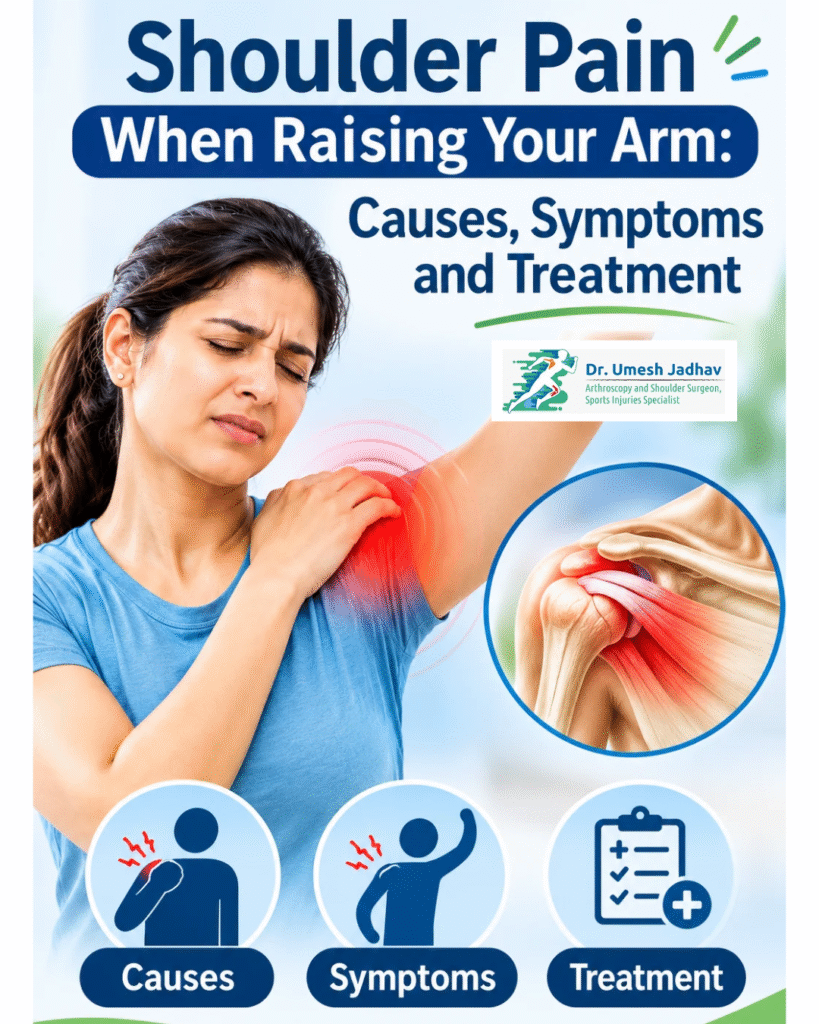
Shoulder pain when raising your arm can make everyday activities such as combing your hair, reaching overhead, dressing or lifting objects uncomfortable. While occasional discomfort may result from muscle strain, persistent or recurring shoulder pain can indicate an underlying shoulder condition that requires medical attention. The shoulder is a highly mobile joint supported by muscles, tendons, ligaments and other soft tissues. Problems affecting any of these structures can cause pain, stiffness and restricted movement.
Understanding the causes of shoulder pain and consulting a shoulder specialist for timely orthopaedic evaluation can help manage discomfort and restore better shoulder function.
Why Does Your Shoulder Hurt When You Raise Your Arm?
Shoulder pain during arm movement commonly occurs when the tendons, muscles or other structures around the shoulder joint become irritated, inflamed or injured.
The pain may occur while lifting your arm forward, sideways or above your head. Depending on the underlying condition, you may also experience stiffness, weakness, clicking sounds or difficulty performing routine activities.
Common Causes of Shoulder Pain When Raising Your Arm
Several shoulder conditions can make overhead movements painful. Some of the most common causes include:
1. Rotator Cuff Injury
The rotator cuff is a group of four muscles and tendons that help stabilise the shoulder and control arm movements. Overuse, repetitive overhead activities, ageing or sudden injury can cause irritation or tearing of these tendons.
Common symptoms include:
- Pain while raising or lowering the arm.
- Weakness when lifting objects.
- Discomfort while sleeping on the affected shoulder.
- Difficulty performing overhead activities.
2. Shoulder Impingement Syndrome
Shoulder impingement occurs when the rotator cuff tendons or surrounding tissues become compressed during certain arm movements. This can cause pain, particularly when lifting the arm sideways or above shoulder level.
People with shoulder impingement may experience:
- Pain while reaching overhead.
- Discomfort during repetitive arm movements.
- Pain when reaching behind the back.
- Reduced shoulder mobility.
3. Frozen Shoulder (Adhesive Capsulitis)
Frozen shoulder is a condition in which the capsule surrounding the shoulder joint becomes thickened and tight, restricting movement. It usually develops gradually and can cause significant stiffness and pain.
Typical symptoms include:
- Difficulty raising the arm.
- Pain while reaching behind the back.
- Shoulder stiffness that gradually increases.
- Discomfort during sleep.
Frozen shoulder is more common in people with diabetes and may develop following prolonged shoulder immobilisation.
4. Shoulder Tendinitis
Shoulder tendinitis refers to inflammation or irritation of a tendon around the shoulder, commonly involving the rotator cuff or biceps tendon. Repetitive movements, sports activities and overuse can contribute to this condition.
Pain may become noticeable when lifting the arm, carrying objects or performing repetitive overhead movements.
5. Shoulder Bursitis
Bursae are small fluid-filled sacs that reduce friction between bones, muscles and tendons. When a shoulder bursa becomes inflamed, it can cause pain during arm movement.
Common symptoms include shoulder tenderness, pain while raising the arm and discomfort when lying on the affected side.
6. Shoulder Arthritis
Shoulder arthritis occurs when the cartilage that protects the joint gradually wears down. This can lead to pain, stiffness and reduced shoulder movement.
Patients may experience:
- Pain during arm movements.
- Morning stiffness.
- Grinding or clicking sensations.
- Difficulty performing daily activities.
When Should You Be Concerned About Shoulder Pain?
Occasional shoulder discomfort may improve with rest, but persistent symptoms should not be ignored.
Consult an orthopaedic specialist if you experience:
- Shoulder pain that continues or keeps returning.
- Difficulty raising your arm above shoulder level.
- Persistent stiffness or restricted movement.
- Weakness while lifting or carrying objects.
- Pain that disturbs your sleep.
- Shoulder pain following an injury or fall.
Important: Sudden severe shoulder pain after an injury, visible deformity or inability to move the arm requires prompt medical assessment. Shoulder pain accompanied by chest discomfort, breathlessness, sweating or pain spreading to the jaw or arm may indicate a medical emergency and requires immediate emergency care.
How Is Shoulder Pain Diagnosed?
An accurate diagnosis is important because different shoulder conditions can produce similar symptoms.
An orthopaedic specialist may recommend:
1. Physical Examination: The doctor assesses shoulder movement, strength, tenderness and the areas where pain occurs.
2. X-ray: Helps identify bone abnormalities, fractures and signs of shoulder arthritis.
3. Ultrasound: May help assess rotator cuff tendons, inflammation and certain soft-tissue abnormalities.
4. MRI Scan: Provides detailed images of the shoulder’s soft tissues, including tendons, muscles, ligaments and joint structures.
The need for imaging depends on the symptoms and clinical examination findings.
What Are the Treatment Options for Shoulder Pain?
Treatment depends on the underlying cause, severity of symptoms and extent of shoulder damage. Many shoulder conditions can initially be managed with non-surgical treatment.
1. Rest and Activity Modification
Avoiding activities that repeatedly aggravate shoulder pain can help reduce irritation. However, prolonged immobilisation without medical advice may increase stiffness, particularly in frozen shoulder.
2. Medication
A doctor may recommend appropriate pain-relieving or anti-inflammatory medication depending on the patient’s condition and medical history.
3. Physiotherapy
Physiotherapy plays an important role in managing many shoulder conditions. A supervised rehabilitation programme may include:
- Gentle range-of-motion exercises.
- Shoulder mobility training.
- Rotator cuff strengthening.
- Posture correction.
- Gradual return to daily activities.
Exercises should be selected according to the diagnosis and should not be forced through significant pain.
4. Injection-Based Treatment
In selected cases, corticosteroid injections may help reduce pain and inflammation. The type and suitability of an injection depend on the specific shoulder condition and clinical assessment.
5. Shoulder Arthroscopy
When conservative treatment does not provide adequate relief or significant structural damage is present, surgery may be considered.
Shoulder arthroscopy is a minimally invasive surgical technique in which a small camera and specialised instruments are inserted through small incisions to diagnose and treat certain shoulder problems.
It may be recommended for selected cases of:
- Rotator cuff tears.
- Shoulder impingement.
- Labral injuries.
- Recurrent shoulder instability.
The appropriate surgical approach depends on the patient’s condition and individual treatment requirements.
Can Shoulder Pain Be Prevented?
Although not every shoulder condition can be prevented, certain habits may help reduce the risk of shoulder problems.
- Maintain good posture while working at a desk.
- Avoid sudden increases in overhead physical activity.
- Warm up before exercising or playing sports.
- Strengthen shoulder muscles under proper guidance.
- Avoid lifting heavy objects with poor technique.
- Take breaks during repetitive activities.
- Seek medical advice for recurring shoulder discomfort.
Frequently Asked Questions (FAQs)
1. Why does my shoulder hurt when I raise my arm above my head?
Pain while raising your arm may be associated with rotator cuff injuries, shoulder impingement, tendinitis, bursitis or frozen shoulder. An orthopaedic examination can help identify the underlying cause.
2. Can frozen shoulder cause pain when raising the arm?
Yes. Frozen shoulder causes progressive stiffness and pain, making it difficult to raise the arm, reach overhead or move the hand behind the back.
3. Is shoulder pain when lifting the arm a sign of a rotator cuff tear?
It can be. Rotator cuff tears may cause pain, weakness and difficulty lifting the arm. However, similar symptoms can occur with other shoulder conditions, so proper diagnosis is important.
4. Can shoulder pain be treated without surgery?
Yes. Many shoulder conditions improve with activity modification, medication, physiotherapy and selected injection-based treatments. Surgery is considered when clinically appropriate.
5. When should I consult an orthopaedic specialist for shoulder pain?
Consult an orthopaedic specialist if shoulder pain persists, limits daily activities, causes weakness or is associated with restricted movement. Seek urgent assessment following significant injury or sudden severe symptoms.
Consult a Shoulder Specialist in Nigdi, PCMC
Shoulder pain and restricted movement can affect your daily life. Dr. Umesh Jadhav, Orthopaedic Doctor and Surgeon in Nigdi, PCMC, offers expert evaluation and treatment for frozen shoulder, rotator cuff tears, shoulder dislocation, AC joint injuries and other shoulder conditions. With a patient-centred approach, he recommends suitable treatment based on each patient’s condition and needs. Visit our website to learn more or book your orthopaedic consultation today.
Get Expert Care for Your Shoulder Health!