
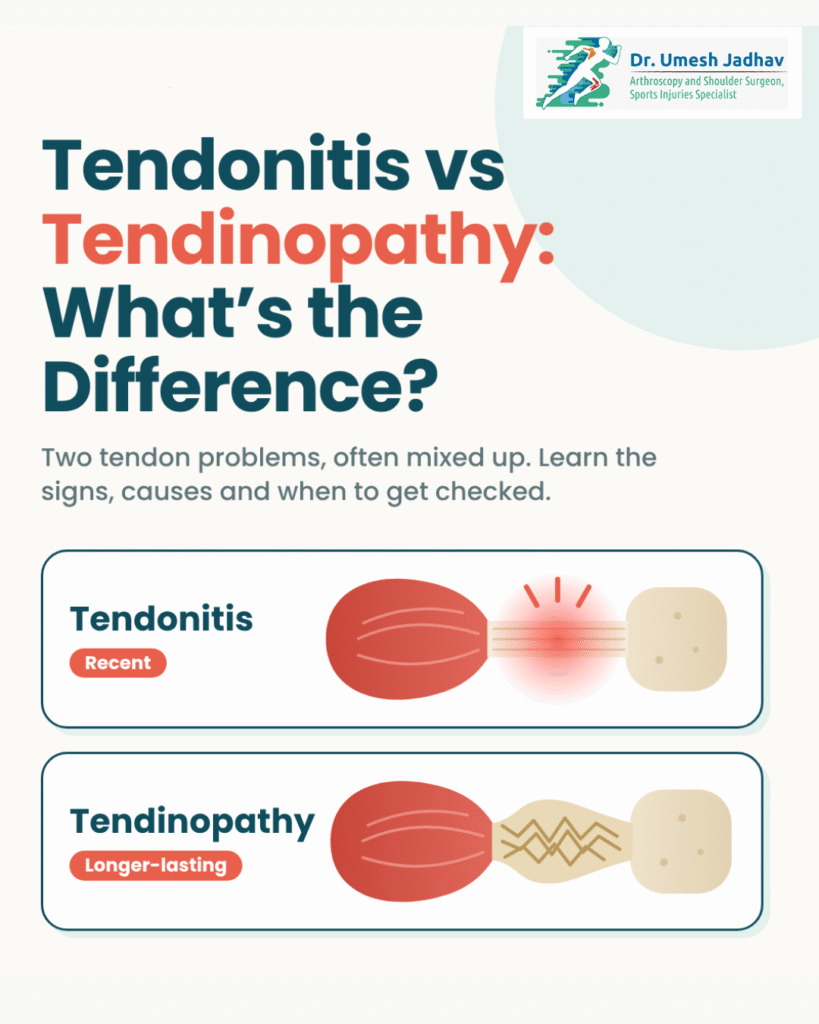
Tendonitis and tendinopathy are often used as if they mean the same thing, but they describe different problems. Tendonitis means short-term inflammation of a tendon. Tendinopathy is a broader term for a painful tendon that has changed inside, usually after long-term overload.
If you have pain in your shoulder, elbow, wrist, knee or heel that keeps returning, knowing which one you have can change how it should be treated. This blog explains the difference in simple words.
What is tendonitis?
Tendonitis is short-term inflammation of a tendon, the strong cord that joins a muscle to a bone. It usually follows a sudden increase in activity, such as starting a new sport, lifting something heavy, or doing the same movement many times in a day.
The pain is typically recent and felt at one spot, often with mild swelling or warmth. When it is caught early and the aggravating activity is eased, it often settles. Common examples include early tennis elbow, shoulder tendonitis and Achilles tendon irritation.
What is tendinopathy?
Tendinopathy is the broader term for a tendon that is painful, tender and less able to handle load. Inside the tendon, the fibres can become thicker and less organised after repeated overload. Inflammation may be small or even absent, which is why many doctors prefer this word for pain that lasts.
Tendinopathy often builds up slowly and can last weeks to months. Common examples include rotator cuff tendinopathy in the shoulder, tennis elbow, Achilles tendinopathy, and jumper’s knee.
Tendonitis vs tendinopathy at a glance
Tendonitis is a recent, inflamed tendon. Tendinopathy is a longer-lasting tendon problem with changes inside the tendon.
| Tendonitis | Tendinopathy | |
|---|---|---|
| What it means | Inflammation of a tendon | A painful tendon with changes inside it |
| How long it lasts | Days to a few weeks | Often weeks to months or more |
| What is happening | Irritation and inflammation | Fibres wear and become disorganised; inflammation may be small |
| Usual trigger | A sudden rise in activity or repeated strain | Overload over a long time, plus age-related change |
| Usual approach | A short break from the trigger, then a gradual return | Planned, step-by-step strengthening with physiotherapy |
| Outlook | Often settles when caught early | Slower, and needs a structured plan |
Common causes and risk factors
Both conditions usually come from asking a tendon to do more than it is ready for. Common reasons include:
- A sudden jump in exercise, training or heavy work
- Repeating the same movement, such as typing, painting, throwing or lifting
- Poor technique, or a desk and chair setup that strains the arm or shoulder
- Age, since tendons become less flexible after about 40
- Tight or weak muscles around the joint
- Unsuitable footwear, which can affect the heel and Achilles tendon
- Some health conditions and some medicines, so tell your doctor about everything you take
- A past injury to the same tendon
Symptoms to watch for
The symptoms of tendonitis and tendinopathy overlap, so the pattern and the duration matter more than the name.
- Pain near a joint that increases with movement or load
- Tenderness at one spot along the tendon
- Stiffness, especially in the morning or after rest
- Mild swelling or warmth in the area
- Weakness or reduced movement
- A creaking or grating feeling when the tendon moves
How it is diagnosed
An orthopedic doctor usually starts with your history and a physical examination. They ask where it hurts, what movements bring it on, and how long it has lasted. They then check tenderness, movement and strength.
Tests are used when the diagnosis is unclear, symptoms last, or a tear is suspected:
- Ultrasound or MRI to look at the tendon itself
- X-ray to check the bones and joint, for example for arthritis or calcium deposits
Treatment options
The right plan depends on which tendon is involved, how long the problem has lasted and what you need to do each day. Most people improve without surgery.
- Ease the trigger. Cut back on the movement that causes the pain, but keep gentle, guided movement going. Long, complete rest can weaken a tendon.
- Physiotherapy. A step-by-step strengthening programme is the main treatment for tendinopathy.
- Comfort measures. Ice or heat may ease symptoms for some people.
- Changes to daily habits. Technique, workstation set-up and footwear can all be adjusted.
- Medicines or injections. These are considered only in selected cases, and your doctor will explain the benefits and risks.
- Surgery. This is considered less often, for example when a tendon is torn or a long, structured plan has not helped.
How to lower the risk
Small habits can help protect your tendons.
- Warm up before exercise or heavy work
- Increase activity gradually instead of all at once
- Strengthen the muscles around the joint
- Check your technique and desk set-up
- Take short breaks from repetitive tasks
- Wear supportive footwear
- Pay attention to early pain and don’t push through it
When to see an orthopedic doctor
See an orthopedic doctor if tendon pain does not improve after a week or two of easing the trigger. Also get checked if you notice any of the following:
- Pain that wakes you at night or is present at rest
- Swelling, redness or warmth that is increasing
- Numbness or tingling
- Difficulty moving the joint or a clear loss of strength
- Pain that keeps coming back in the same place
Seek care promptly if you feel a sudden snap or sharp pain followed by weakness, since this can mean a tendon tear. A hot, red, swollen joint with fever needs urgent medical attention.
Frequently asked questions
Is tendonitis the same as tendinopathy?
No. Tendonitis means short-term inflammation of a tendon. Tendinopathy is a broader term for a painful tendon with changes inside it, usually from long-term overload.
Can tendonitis turn into tendinopathy?
It can. If an irritated tendon keeps being overloaded without time to recover, it may develop longer-term changes. Early care helps lower that chance.
How long does tendinopathy take to heal?
It depends on the tendon, how severe it is and how well the load is managed. Many people need weeks to months. Your doctor or physiotherapist can give an estimate for your case.
Should I rest completely?
Usually not. Reduce the movement that causes pain, and keep gentle, guided activity going. Long periods of complete rest can weaken the tendon.
Do I need surgery?
Most cases improve without surgery. It is considered in selected cases, such as a torn tendon or no improvement after a structured treatment plan.
Get your tendon pain checked
Tendon pain that keeps coming back or does not settle is worth a proper evaluation. Consult an orthopedic specialist in Nigdi PCMC to find the cause and understand the right treatment options for you.
This article is for general information only and is not a substitute for medical advice.