
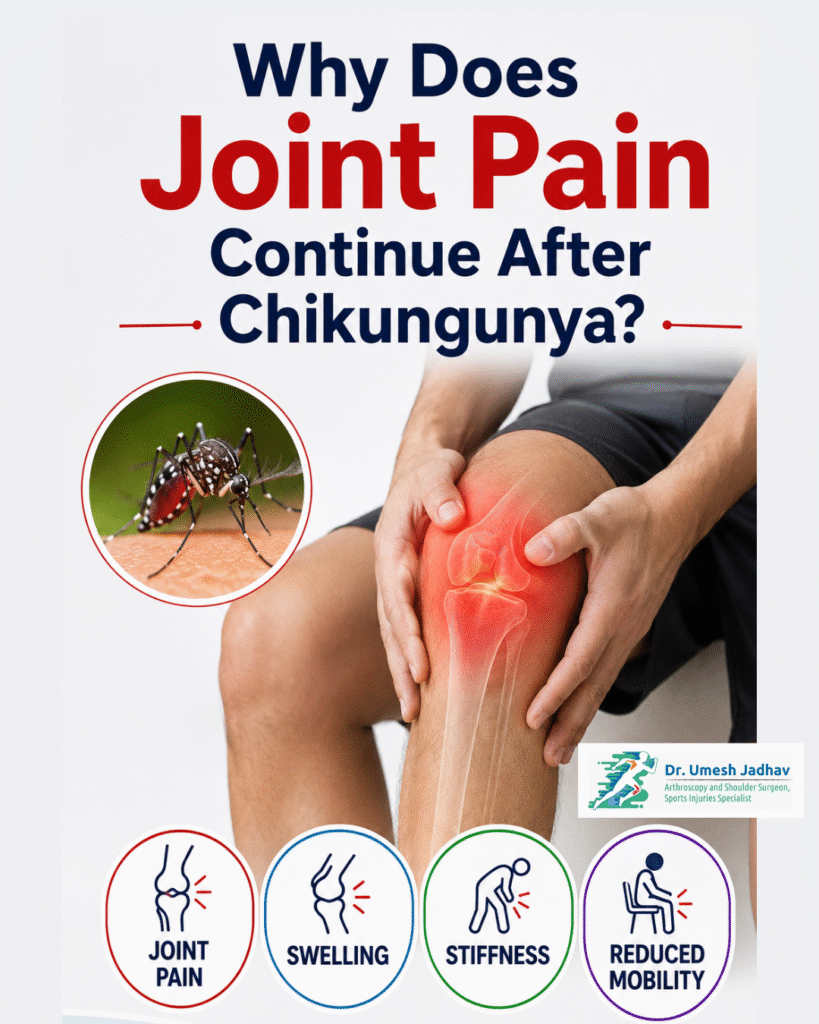
Chikungunya is a viral infection transmitted mainly through the bite of infected Aedes aegypti and Aedes albopictus mosquitoes. These mosquitoes commonly bite during the daytime and can also transmit other infections such as dengue. Chikungunya typically causes a sudden fever along with severe joint pain, and may also cause muscle pain, headache, rash, fatigue and joint swelling.
For most people, the acute illness improves within days to a few weeks. However, joint pain and stiffness may continue even after the fever and other symptoms have settled. In some people, these symptoms can persist for several weeks or months and, less commonly, even longer.
So, why does the joint pain sometimes stay even after recovering from chikungunya? The answer lies in how the infection can affect the joints and the inflammatory response that may continue after the acute phase of the illness.
Quick Answer:
Joint pain can continue after chikungunya because the infection can trigger significant inflammation in the joints. Although the fever and acute infection usually resolve, some people may experience ongoing pain, stiffness or swelling for weeks or months, and occasionally longer. Persistent or worsening symptoms should be evaluated by a doctor to determine the cause and appropriate treatment.
Why Can Joint Pain Persist After Chikungunya?
Chikungunya primarily affects the joints during the acute infection. In some people, the inflammation does not completely settle after the infection has passed. This can lead to ongoing or recurring joint symptoms.
Persistent symptoms may include:
- Joint pain or tenderness
- Morning stiffness
- Joint swelling
- Reduced range of movement
- Difficulty walking or climbing stairs
- Pain that comes and goes
- Fatigue associated with prolonged symptoms
The knees, ankles, wrists, fingers and other peripheral joints can be affected.
Importantly, persistent joint pain does not necessarily mean that the virus is still actively infecting the joint. Chikungunya can leave behind prolonged inflammatory or arthritis-like symptoms even after the acute infection has resolved.
Is Persistent Joint Pain After Chikungunya Normal?
It can happen, but persistent or worsening symptoms should not simply be ignored. Most people recover completely, but a proportion develop prolonged joint pain or arthritis-like symptoms. Older adults and people with certain underlying health conditions may be at greater risk of a more difficult recovery.
If pain continues for weeks, keeps returning, or is accompanied by swelling and stiffness, an appropriate medical evaluation can help determine whether the symptoms are related to post-chikungunya inflammation or another joint condition.
What Can Help During Recovery?
Management depends on the severity and duration of symptoms. Depending on the individual’s condition, a doctor may recommend:
Gentle movement and rehabilitation: Appropriate exercises can help maintain joint mobility and strength without unnecessarily stressing painful joints.
Gradual return to activity: Avoid suddenly returning to strenuous exercise or prolonged physical activity if the joints are still painful.
Adequate rest: Balancing activity with sufficient recovery time can help manage fatigue and discomfort.
Medical evaluation: Persistent symptoms may require assessment by an orthopaedic or rheumatology specialist to identify ongoing inflammation or another underlying condition.
Medication should be taken only according to medical advice. During the acute illness, dengue may need to be ruled out before certain pain medicines such as aspirin or NSAIDs are used because of bleeding risk.
When Should You See an Orthopaedic Specialist?
- Persistent pain after recovering from chikungunya
- Repeated joint swelling
- Significant morning stiffness
- Difficulty walking or using your hands
- Reduced joint movement
- Pain that interferes with sleep or daily activities
- Symptoms that are worsening instead of improving
Early evaluation can help identify persistent inflammation and guide an appropriate rehabilitation and treatment plan.
The Takeaway
Recovering from the fever does not always mean that joint symptoms disappear immediately. Post-chikungunya joint pain can persist for weeks, months or, in some cases, years.
If joint pain continues after chikungunya or starts affecting your mobility and daily activities, don’t simply assume that it will go away on its own. A timely clinical assessment can help identify the cause and determine the right approach to recovery.
“If persistent joint pain, swelling or stiffness continues after chikungunya, consult an orthopaedic specialist for evaluation and appropriate management.”
Frequently Asked Questions
1. Can joint pain continue after chikungunya?
Yes. Joint pain can persist for weeks or months after the infection, and in some people it may last even longer.
2. Why do my joints still hurt after chikungunya?
Chikungunya can cause significant inflammation in the joints, and joint symptoms may continue even after the acute infection has resolved.
3. Which joints are commonly affected after chikungunya?
The knees, ankles, wrists, hands and other peripheral joints are commonly affected.
4. When should I see a doctor for joint pain after chikungunya?
See a doctor if pain or swelling persists, keeps returning, limits movement, or interferes with your daily activities.
5. Can post-chikungunya joint pain be treated?
Yes. Treatment is based on the symptoms and may include appropriate pain management, gradual physical activity and rehabilitation under medical guidance.