
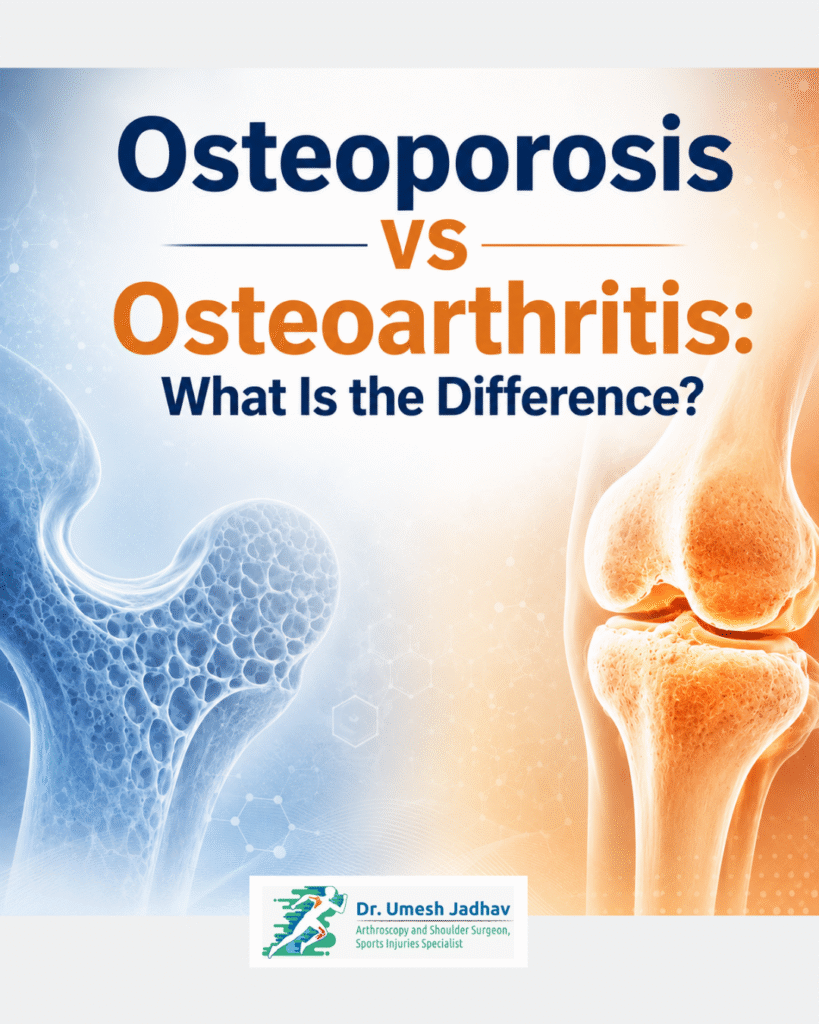
As we age, bone and joint problems can become more common, but osteoporosis and osteoarthritis are two distinct conditions that are often mistaken for one another.
While both can affect mobility and quality of life, osteoporosis primarily weakens the bones, whereas osteoarthritis affects the joints and surrounding structures. Understanding the key differences between these conditions can help you recognise warning signs early and seek the right medical evaluation and treatment.
What Is Osteoporosis?
Osteoporosis is a disease that weakens bones and makes them more likely to fracture. It develops when bone mass and bone mineral density decrease or when the structure of the bone becomes weaker.
Osteoporosis is often called a “silent disease” because it may cause no noticeable symptoms until a fracture occurs. Common fracture sites include the hip, spine and wrist.
Common Risk Factors for Osteoporosis
The risk may increase with:
- Increasing age
- Menopause and declining oestrogen levels
- Low body weight
- Family history of osteoporosis or hip fracture
- Physical inactivity
- Smoking
- Excessive alcohol consumption
- Long-term use of certain medicines, including corticosteroids
- Certain medical conditions that affect bone health
What Is Osteoarthritis?
Osteoarthritis (OA) is a degenerative joint condition that affects the tissues within and around a joint, including the cartilage that covers the ends of bones. As cartilage and other joint structures become damaged, pain, stiffness and reduced movement can develop.
Osteoarthritis commonly affects weight-bearing joints such as the knees and hips, as well as the hands and spine.
Common Symptoms of Osteoarthritis
People with osteoarthritis may experience:
- Joint pain, particularly with activity
- Stiffness, often after periods of inactivity
- Joint swelling
- Reduced range of motion
- Difficulty with activities such as walking, climbing stairs or gripping objects
- A feeling of joint instability in some cases
Osteoporosis vs Osteoarthritis: Key Differences
| Feature | Osteoporosis | Osteoarthritis |
|---|---|---|
| Main problem | Weakening of bones | Degeneration and damage within a joint |
| Primarily affects | Bone strength and density | Cartilage and other joint structures |
| Typical symptoms | Often no symptoms until a fracture | Pain, stiffness and reduced joint movement |
| Major concern | Fractures | Pain, loss of function and mobility |
| Common sites | Hip, spine and wrist | Knees, hips, hands and spine |
| Key test | Bone mineral density/DXA scan | Clinical assessment and imaging such as X-ray when appropriate |
| Treatment focus | Reducing bone loss and fracture risk | Managing pain, improving function and protecting joint health |
A DXA scan is commonly used to measure bone mineral density and help diagnose osteoporosis and assess fracture risk.
Can You Have Both Osteoporosis and Osteoarthritis?
Yes. Having osteoarthritis does not protect you from osteoporosis, and a person can have both conditions at the same time.
For example, someone may have knee osteoarthritis causing pain while also having low bone density that increases their risk of fractures. Therefore, persistent joint symptoms, fractures after minor falls, height loss or other concerns about bone health should be evaluated appropriately.
How Are They Treated?
Treatment depends on the condition, its severity and the individual’s overall health.
Osteoporosis Management
Management may include:
- Adequate calcium and vitamin D intake
- Weight-bearing and muscle-strengthening physical activity
- Fall prevention
- Avoiding smoking
- Limiting excessive alcohol intake
- Prescription medications when indicated to reduce fracture risk
Osteoarthritis Management
Treatment may involve:
- Regular, appropriate exercise
- Strengthening and flexibility exercises
- Weight management when appropriate
- Physiotherapy
- Medicines for pain and inflammation when prescribed
- Braces or other supportive devices in selected cases
- In advanced cases, joint replacement surgery may be considered
When Should You See an Orthopaedic Specialist?
Do not ignore:
- Persistent or worsening joint pain
- Difficulty walking or climbing stairs
- Recurrent joint swelling or stiffness
- A fracture after a minor fall or injury
- Sudden severe back pain or unexplained height loss
- Increasing difficulty performing everyday activities
Early evaluation can help identify whether the problem is related to bone weakness, joint degeneration, an injury, or another condition and guide appropriate treatment.
Conclusion
Osteoporosis weakens the bones, while osteoarthritis affects the joints—but both can impact mobility and quality of life. Recognising the symptoms early and seeking timely evaluation can help prevent complications and support better long-term musculoskeletal health.
If you are experiencing persistent joint pain, stiffness, difficulty walking, or concerns about bone health, consult Dr. Umesh Jadhav, Orthopaedic Specialist in PCMC, for expert evaluation and personalised treatment. For comprehensive orthopaedic care and treatment, timely specialist guidance can help you stay active and mobile.