
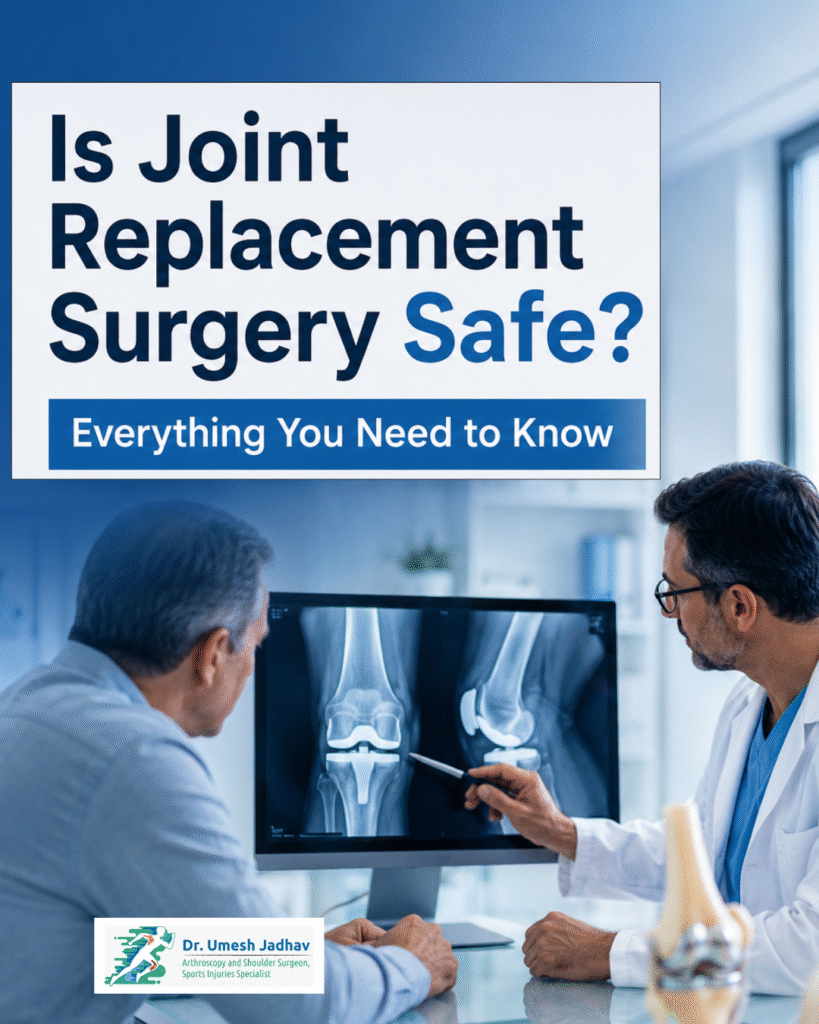
Joint pain can make even simple daily activities like walking, climbing stairs, or getting out of a chair difficult. When medications, physiotherapy, and lifestyle changes no longer provide relief, joint replacement surgery may be recommended. A common concern among patients is, “Is joint replacement surgery safe?”
The answer is yes. Joint replacement surgery is considered one of the safest and most successful orthopedic procedures when performed by an experienced orthopedic surgeon. Advances in surgical techniques, implants, anesthesia, and post-operative rehabilitation have significantly improved patient outcomes and recovery.
Quick Answer
Joint replacement surgery is a safe and effective treatment for severe joint damage caused by arthritis, injury, or age-related wear and tear. Most patients experience significant pain relief, improved mobility, and a better quality of life. As with any surgery, there are some risks, but these can be minimized through proper evaluation, experienced surgical care, and post-operative rehabilitation.
What Is Joint Replacement Surgery?
Joint replacement surgery involves removing the damaged or worn-out parts of a joint and replacing them with artificial implants made from durable materials such as metal, ceramic, or medical-grade plastic.
The most commonly replaced joints include:
- Knee
- Hip
- Shoulder
The primary goal is to relieve pain, restore movement, and help patients return to their normal daily activities.
When Is Joint Replacement Surgery Recommended?
An orthopedic surgeon may recommend joint replacement if you have:
- Severe osteoarthritis or rheumatoid arthritis
- Chronic joint pain that affects daily life
- Limited joint movement and stiffness
- Difficulty walking or climbing stairs
- Joint damage following an injury
- Persistent pain despite medications, physiotherapy, or injections
Surgery is usually considered only after conservative treatments have failed to provide lasting relief.
Is Joint Replacement Surgery Safe?
Yes. Modern joint replacement surgery has a high success rate, with most patients achieving excellent long-term results.
Several factors contribute to its safety:
- Advanced surgical techniques
- High-quality, long-lasting implants
- Improved anesthesia methods
- Better infection prevention protocols
- Early mobilization after surgery
- Personalized rehabilitation programs
Choosing an experienced orthopedic surgeon and following the recommended recovery plan play a vital role in achieving the best possible outcome.
What Are the Benefits?
Most patients notice significant improvements after recovery, including:
- Relief from chronic joint pain
- Improved mobility and flexibility
- Easier walking and daily activities
- Better sleep due to reduced pain
- Increased independence
- Improved overall quality of life
Many patients are able to return to work, travel, and enjoy recreational activities after completing rehabilitation.
Are There Any Risks?
Like any surgical procedure, joint replacement carries some risks, although serious complications are uncommon.
Possible risks include:
- Infection
- Blood clots
- Bleeding
- Implant loosening over time
- Joint stiffness
- Nerve or blood vessel injury (rare)
Your surgeon will carefully evaluate your overall health before surgery and take several precautions to reduce these risks.
Recovery After Joint Replacement Surgery
Recovery varies depending on the joint replaced, your age, and overall health.
Most patients can expect:
- Walking with support within a day or two after surgery
- Physiotherapy starting soon after the procedure
- Gradual improvement in strength and mobility over the following weeks
- Return to most daily activities within a few weeks to months
Following your rehabilitation plan is essential for a successful recovery.
Tips for a Successful Recovery
You can improve your recovery by:
- Following your physiotherapy program regularly
- Taking medications as prescribed
- Maintaining a healthy weight
- Eating a balanced, protein-rich diet
- Keeping the surgical wound clean
- Attending all follow-up appointments
- Avoiding high-impact activities until cleared by your surgeon
Who Is a Right Candidate?
You may be a suitable candidate if you:
- Have severe joint pain affecting your quality of life
- Experience difficulty performing everyday activities
- Have significant joint damage visible on imaging
- Have not responded to non-surgical treatments
- Are medically fit for surgery
Your orthopedic specialist will determine whether joint replacement is the best option based on your condition and overall health.
Conclusion
Joint replacement surgery is a safe, reliable, and highly effective treatment for patients with severe joint damage. Thanks to modern surgical techniques and comprehensive rehabilitation, most patients experience lasting pain relief, improved mobility, and a better quality of life.
If chronic joint pain is limiting your daily activities despite conservative treatment, consult an experienced orthopedic specialist. A thorough evaluation can help determine whether joint replacement surgery is the right choice for you.
Frequently Asked Questions
How successful is joint replacement surgery?
Joint replacement surgery has a high success rate, with most patients experiencing significant pain relief and improved joint function for many years.
How long do artificial joints last?
Modern joint implants typically last 15 to 20 years or longer, depending on the type of implant, activity level, and overall health.
Is this surgery painful?
You may experience temporary discomfort after surgery, but modern pain management techniques and physiotherapy help control pain and support recovery.
How soon can I walk after joint replacement surgery?
Many patients begin walking with assistance within 24 to 48 hours after surgery, depending on the type of joint replaced and their overall condition.