
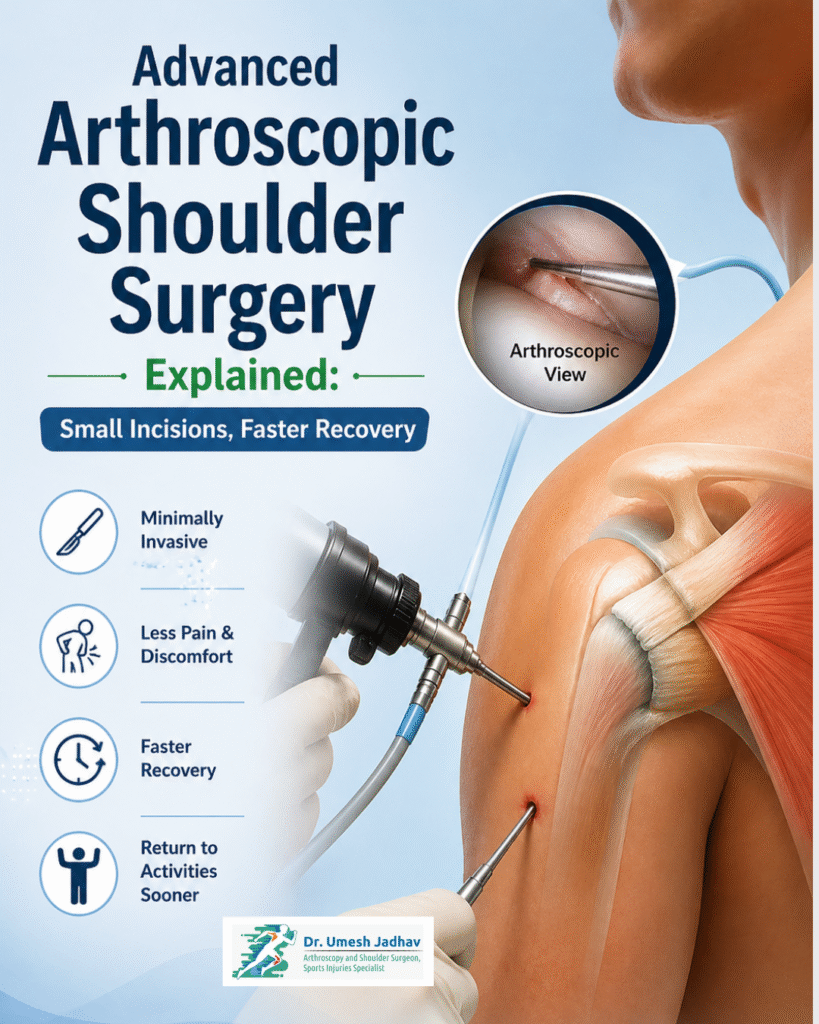
Shoulder pain can limit everyday activities—from lifting your arm to sleeping comfortably. These days, many people suffering from shoulder pain are opting for arthroscopic shoulder surgery, a minimally invasive shoulder surgery that enables precise repair for conditions like rotator cuff tears and frozen shoulder, offering less pain, faster recovery, and minimal downtime. Before choosing surgery, consult an orthopedic surgeon near you for proper guidance. In Nigdi–PCMC, you can consult Dr. Umesh Jadhav for accurate evaluation and the right treatment options.
What Is Arthroscopic Shoulder Surgery?
Arthroscopic Shoulder Surgery is a technique where a surgeon uses a thin camera (arthroscope) and specialized instruments inserted through small incisions (keyholes). The camera projects high-definition images, allowing accurate diagnosis and treatment inside the joint without opening it widely.
Common Conditions Treated
Arthroscopy is widely used to manage:
- Rotator Cuff Tear (partial or full thickness)
- Frozen Shoulder
- Shoulder impingement syndrome
- Labral injuries (SLAP tears)
- Recurrent shoulder dislocation/instability
- Calcific tendinitis
- Early degenerative changes and loose bodies
Why Arthroscopy Is the Preferred Choice
1) Smaller Incisions, Less Tissue Damage
Tiny portals reduce muscle and soft-tissue trauma compared to open surgery.
2) Faster Recovery & Early Mobilization
Most patients begin guided movement sooner, leading to a quicker return to daily activities.
3) Reduced Pain & Minimal Scarring
Lower postoperative pain and cosmetically smaller scars.
4) High Precision
Magnified visualization helps surgeons repair delicate structures like the rotator cuff and labrum accurately.
How the Procedure Works (Step-by-Step)
- Anesthesia: General or regional (nerve block) anesthesia
- Portals Creation: 2–4 small incisions around the shoulder
- Joint Inspection: Arthroscope visualizes cartilage, tendons, and ligaments
- Repair: Sutures, anchors, or debridement performed as needed
- Closure: Small sutures or steri-strips; dressing applied
Recovery Timeline (Typical)
Recovery may vary depending on the severity of the condition, type of procedure, and individual healing response.
- Day 1–7: Pain control, sling support, gentle hand/elbow movements
- 2–6 Weeks: Supervised physiotherapy; gradual range-of-motion exercises
- 6–12 Weeks: Strengthening phase
- 3–6 Months: Return to routine work/sports (varies by procedure and severity)
Recovery varies depending on the condition (e.g., large rotator cuff tears take longer than simple decompression).
Risks & Safety
Arthroscopy is generally safe, but potential risks include:
- Infection (rare)
- Stiffness or persistent pain
- Nerve or vessel irritation (uncommon)
- Re-tear in large or chronic tendon injuries
Careful patient selection and structured rehabilitation significantly reduce complications.
Who Is a Good Candidate?
- Persistent shoulder pain not improving with medication and physiotherapy
- Confirmed structural injury on clinical exam/imaging
- Recurrent instability or functional limitation
- Active individuals seeking faster recovery with minimal downtime
Post-Surgery Rehabilitation: The Key to Success
A tailored physiotherapy program is crucial. It focuses on:
- Restoring range of motion safely
- Gradual strengthening of rotator cuff and scapular muscles
- Posture correction and activity modification
Adherence to rehab often determines the final outcome as much as the surgery itself.
Conclusion
Arthroscopic Shoulder Surgery has significantly improved the way shoulder conditions are treated. With its minimally invasive approach, it allows accurate diagnosis and effective repair while reducing pain, scarring, and recovery time. For patients dealing with persistent shoulder issues, this technique provides a safe and reliable option to restore function and return to daily activities with confidence. Book your appointment or visit website for more information.
Disclaimer
For informational purposes only. Always consult a qualified orthopedic specialist for diagnosis and treatment advice.