
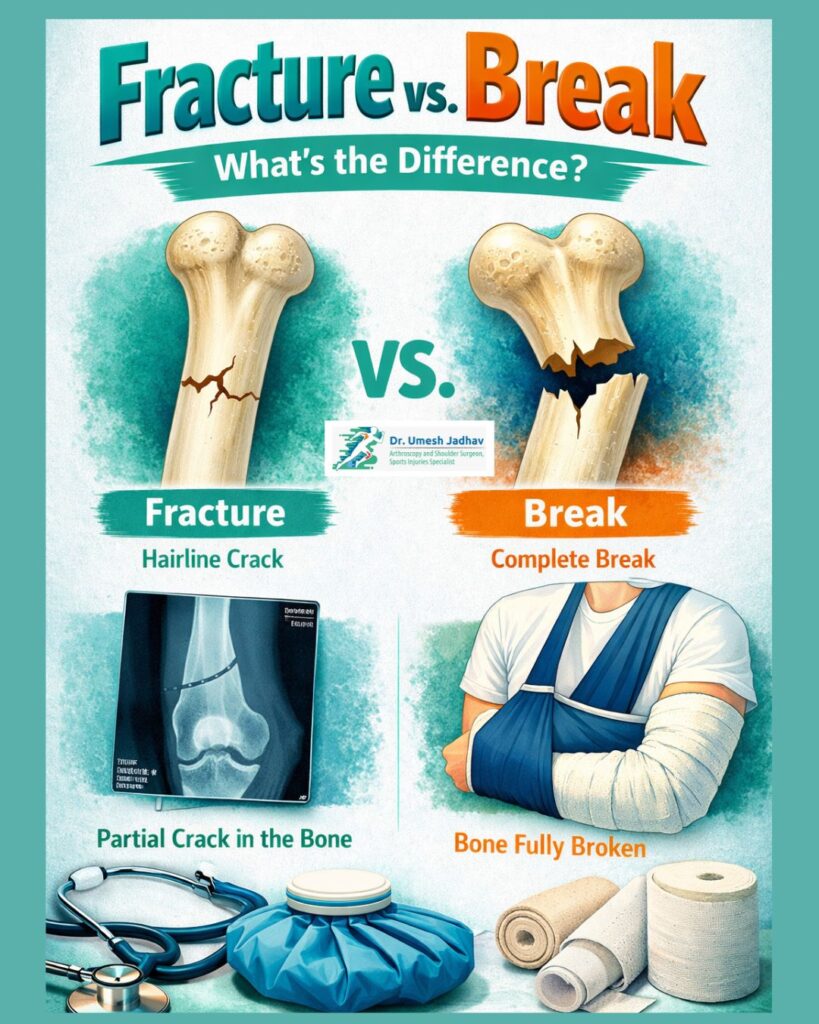
Bone injuries are common, especially after accidents, sports injuries, or falls. Many patients often ask: “Is a fracture different from a break?” The terms are frequently used in medical reports and everyday conversations, which can create confusion.
In reality, there is no difference between a fracture and a break. Both terms refer to the same condition—a crack or break in the bone. However, understanding the types, symptoms, and treatment options is important for proper recovery.
According to orthopedic specialists, Dr. Umesh Jadhav, early diagnosis and appropriate treatment play a key role in preventing complications and ensuring proper bone healing.
What Is a Bone Fracture?
A bone fracture is a medical term used to describe any loss of continuity in the bone structure. This means the bone can crack, split, or break completely depending on the severity of the injury.
Doctors usually use the word “fracture” in medical reports because it helps describe the specific type and severity of the injury more precisely.
For example, when you visit an orthopedic specialist such as Dr. Umesh Jadhav in Nigdi or PCMC, your diagnosis may include terms like hairline fracture, compound fracture, or stress fracture.
What Is a Bone Break?
The term “bone break” is commonly used in everyday language. It simply means that the bone has fractured or cracked due to trauma or pressure.
In simple words:
-
Fracture = Medical term
-
Break = Common everyday term
Both refer to the same injury, but doctors prefer the word fracture because it helps categorize the condition more accurately.
Common Types of Bone Fractures
Orthopedic doctors classify fractures based on how the bone is damaged. Some of the most common types include:
1. Simple (Closed) Fracture
The bone breaks but does not pierce the skin.
2. Compound (Open) Fracture
The broken bone breaks through the skin, increasing the risk of infection.
3. Hairline Fracture
A small crack in the bone that may not cause severe pain initially but can worsen if ignored.
4. Stress Fracture
Often seen in athletes or runners, caused by repeated stress on a bone.
5. Comminuted Fracture
The bone breaks into multiple pieces, usually due to high-impact trauma such as road accidents.
Orthopedic specialists like Dr. Umesh Jadhav carefully evaluate X-rays or scans to determine the exact type of fracture before planning treatment.
Common Causes of Fractures
Bones are strong, but certain situations can cause them to crack or break.
Some common causes include:
-
Road accidents or trauma
-
Sports injuries
-
Falls from height
-
Osteoporosis (weak bones)
-
Repetitive stress on bones
-
Age-related bone weakness
In growing cities like Pune and PCMC, orthopedic doctors frequently treat fractures caused by bike accidents, slips, and sports injuries.
Symptoms of a Bone Fracture
A fracture usually causes noticeable symptoms. If you experience the following signs, you should seek medical attention immediately:
-
Severe pain at the injury site
-
Swelling and bruising
-
Difficulty moving the affected limb
-
Deformity or abnormal position of the bone
-
Inability to bear weight
-
Tenderness when touched
If any of these symptoms appear after a fall or accident, consulting an experienced orthopedic specialist like Dr. Umesh Jadhav can help confirm the diagnosis quickly.
How Are Fractures Diagnosed?
Doctors typically use the following methods to diagnose bone fractures:
-
Physical examination
-
X-ray imaging
-
CT scan (in complex fractures)
-
MRI scan (for stress fractures or soft tissue injuries)
An accurate diagnosis ensures the right treatment plan and faster recovery.
Treatment Options for Fractures
Treatment depends on the type, location, and severity of the fracture. Common treatment methods include:
1. Immobilization
Using a cast, splint, or brace to keep the bone stable during healing.
2. Medication
Pain relief medications and anti-inflammatory drugs may be prescribed.
3. Bone Realignment (Reduction)
Doctors may need to reposition the bone before applying a cast.
4. Surgery
Severe fractures may require surgical fixation using plates, screws, or rods.
Experienced orthopedic surgeons such as Dr. Umesh Jadhav use advanced surgical techniques when necessary to restore bone alignment and function.
How Long Does a Fracture Take to Heal?
Healing time varies depending on the injury and the patient’s health.
Typical recovery times:
-
Minor fractures: 4–6 weeks
-
Moderate fractures: 6–12 weeks
-
Complex fractures: 3–6 months or longer
Proper rest, physiotherapy, and follow-up care are essential for complete recovery.
When Should You See an Orthopedic Doctor?
You should consult a doctor immediately if you experience:
-
Severe pain after a fall or accident
-
Inability to move a limb
-
Visible bone deformity
-
Persistent swelling or bruising
-
Difficulty walking or bearing weight
Early treatment helps prevent long-term complications and improves healing outcomes.
Final Thoughts
Many people believe that a fracture is more serious than a break, but medically they are exactly the same thing. The real difference lies in the type and severity of the bone injury.
Prompt diagnosis and proper treatment are crucial for full recovery. If you suspect a bone injury, consult Dr. Umesh Jadhav an experienced orthopedic specialist in Nigdi PCMC can help ensure the right care and faster healing.