
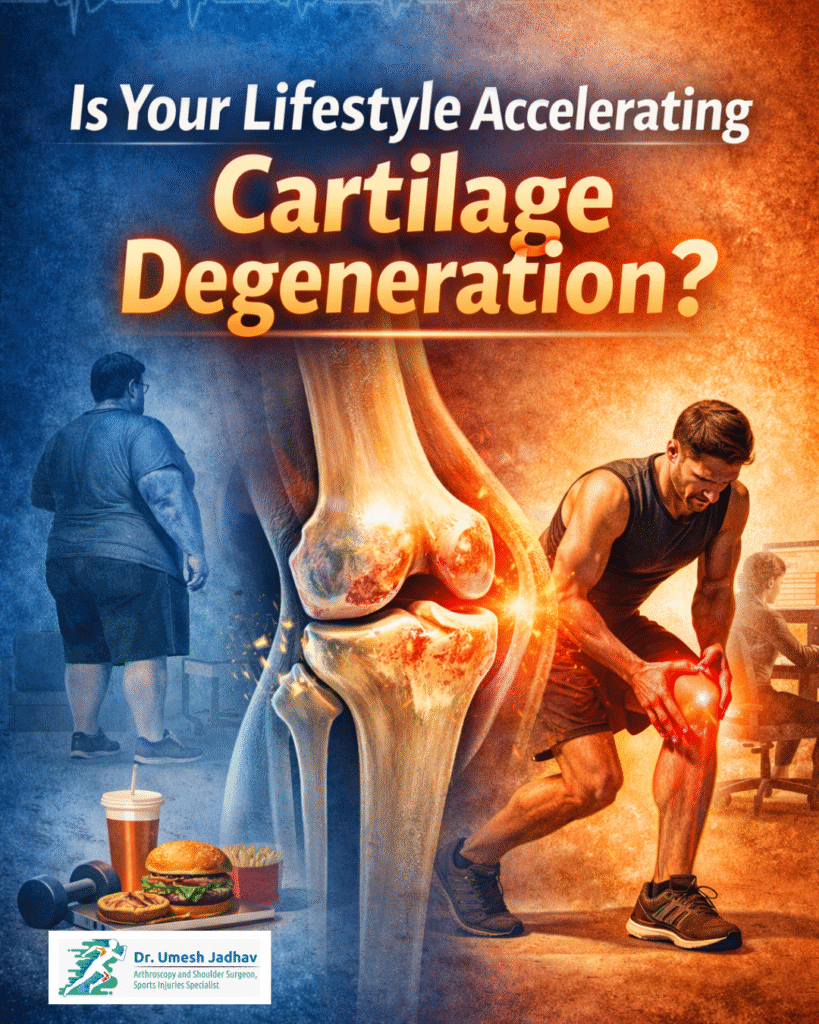
Cartilage plays a silent yet critical role in keeping your joints healthy and pain-free. It cushions the bones, enables smooth movement, and absorbs shock during everyday activities such as walking, bending, or climbing stairs. However, modern lifestyle habits are increasingly becoming a major cause of early cartilage degeneration, leading to joint pain, stiffness, and conditions like osteoarthritis.
Therefore, if you notice persistent joint pain, stiffness, or movement restriction, it is always advisable to consult an experienced orthopaedic surgeon or an orthopedic doctor near you for proper assessment and early treatment.
What many people don’t realize is that cartilage damage doesn’t happen overnight. It develops gradually, often accelerated by ev
eryday choices we make. Let’s explore how your lifestyle may be affecting your joint health—and what you can do to protect it.
What Is Cartilage Degeneration?
Cartilage degeneration refers to the gradual breakdown of cartilage tissue that protects the ends of bones in joints. Since cartilage has limited ability to heal itself, damage tends to worsen over time if not addressed early.
As cartilage wears down, bones start rubbing against each other, causing:
-
Joint pain and tenderness
-
Stiffness, especially in the morning
-
Reduced flexibility and mobility
-
Swelling and inflammation
According to orthopedic specialists, lifestyle-related factors are now among the leading contributors to early joint degeneration—even in people under 40.
Lifestyle Habits That Accelerate Cartilage Damage
1. Sedentary Routine and Lack of Movement
Long hours of sitting—whether at a desk, in front of a screen, or while commuting—reduce blood flow to the joints. Cartilage depends on movement to receive nutrients. Without regular motion, cartilage weakens and becomes more prone to damage.
💡 Orthopedic doctors often emphasize that “motion is lotion” for joints.
2. Excess Body Weight
Every extra kilogram of body weight puts additional stress on weight-bearing joints like the knees, hips, and spine. Studies show that obesity significantly increases the risk of cartilage wear and knee osteoarthritis.
Even a modest weight reduction can:
-
Lower joint pressure
-
Reduce inflammation
-
Slow cartilage breakdown
3. Poor Posture and Bad Ergonomics
Slouching, improper sitting posture, and incorrect workstation setup create uneven stress on joints and spine. Over time, this imbalance leads to abnormal joint loading and cartilage degeneration, especially in the knees, hips, and lower back.
4. Repetitive Stress and Overuse
High-impact activities, improper workout techniques, or repetitive movements without adequate rest can cause micro-injuries to cartilage. Athletes, fitness enthusiasts, and people with physically demanding jobs are particularly at risk if proper joint care is ignored.
An experienced orthopedic specialist may often notice early cartilage damage in patients who exercise intensely without recovery or guidance.
5. Nutrient-Poor Diet
Cartilage health depends on nutrients like:
-
Vitamin D
-
Calcium
-
Omega-3 fatty acids
-
Collagen-supporting proteins
A diet high in processed foods, sugar, and unhealthy fats increases inflammation, which directly contributes to cartilage breakdown and joint pain.
6. Smoking and Excessive Alcohol Consumption
Smoking reduces oxygen supply to tissues and interferes with collagen production, which is essential for cartilage structure. Alcohol, when consumed excessively, increases systemic inflammation and weakens joint repair mechanisms.
Early Warning Signs You Should Not Ignore
Cartilage degeneration often starts silently. Watch out for these early symptoms:
-
Persistent joint pain after activity
-
Stiffness that improves slowly with movement
-
Clicking or grinding sounds in joints
-
Reduced range of motion
Consulting a qualified orthopedic doctor at this stage can help slow or even prevent further damage.
How to Protect Your Cartilage Naturally
✔ Stay Active, But Smart
Low-impact exercises such as walking, swimming, yoga, and cycling nourish cartilage without overloading joints.
✔ Maintain a Healthy Weight
Weight management remains one of the most effective ways to reduce joint stress and preserve cartilage.
✔ Improve Posture and Ergonomics
Simple changes in sitting habits and workstation setup can significantly reduce joint strain.
✔ Eat for Joint Health
Focus on anti-inflammatory foods like fruits, vegetables, nuts, seeds, and fatty fish. A doctor may also recommend supplements if deficiencies are present.
✔ Seek Expert Guidance Early
An orthopedic specialist can assess joint health using clinical examination and imaging, and guide you with personalized lifestyle modifications or treatments before surgery becomes necessary.
Final Thoughts
Cartilage degeneration is not just an age-related issue—it is a lifestyle-driven problem in many cases. But with early awareness and smarter daily choices, you can significantly protect your joints and slow down cartilage damage.
If you are experiencing persistent joint pain, stiffness, or reduced mobility, don’t ignore the signs. Consultation with Dr. Umesh Jadhav an experienced orthopedic doctor and surgeon in Nigdi PCMC can help preserve your cartilage, improve joint function, and prevent long-term complications.
Your joints support you every single day—make sure your lifestyle supports them too.