
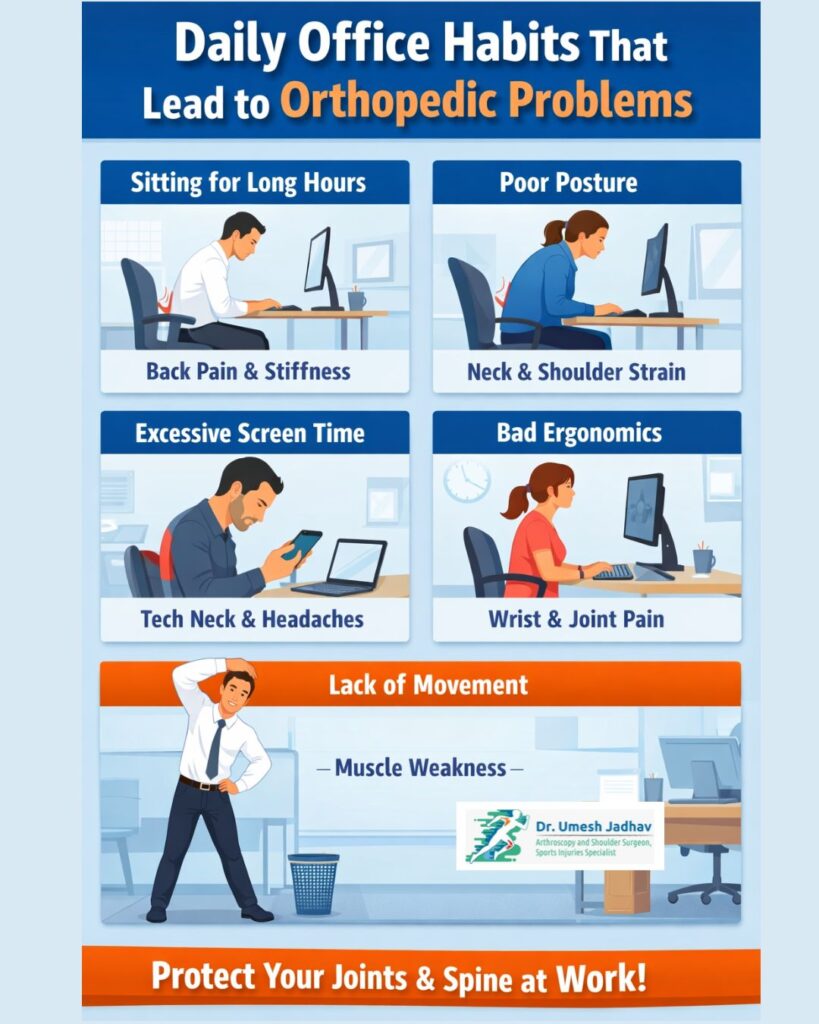
Modern office life looks comfortable—air-conditioned rooms, cushioned chairs, and screens doing most of the work. But behind this comfort hides a growing health issue. Everyday office habits like long sitting hours, poor posture, and constant screen use are silently damaging our bones, joints, spine and give you orthopedic problems. What starts as mild stiffness or occasional pain often turns into chronic back pain, neck issues, shoulder problems, or even slipped disc if ignored for too long.
So here’s a simple question for you:
👉 At the end of your workday, do you feel back pain, neck stiffness, shoulder heaviness, or joint discomfort—and still call it “normal office stress”?
Correcting Habits with Expert Guidance
The good news is—most office-related orthopedic problems are preventable and manageable when addressed early. This is where expert orthopedic care becomes crucial.
Dr. Umesh Jadhav, an experienced Orthopedic Doctor in Nigdi, PCMC, focuses on identifying the root cause of office-related pain and guiding patients with the right balance of medical care, posture correction, and lifestyle changes—before the problem becomes severe.
 Common Office Habits That Harm Your Bones & Joints
1. Prolonged Sitting Without Breaks
Sitting continuously for hours increases pressure on the spine, especially the lower back. Over time, this can lead to disc problems, stiffness, and chronic pain.
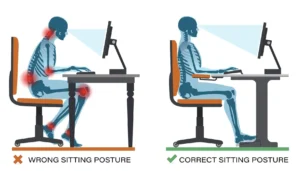
2. Poor Sitting Posture
Slouching, leaning forward, or sitting without proper back support puts extra strain on the neck, shoulders, and spine—one of the most common causes of neck and upper-back pain in office workers.
3. Laptop & Mobile Overuse
Looking down at screens for long periods causes “tech neck,” leading to cervical spine issues, headaches, and shoulder tightness.
4. Improper Desk Ergonomics
Incorrect chair height, poorly positioned screens, or unsupported wrists can cause shoulder pain, wrist strain, and long-term joint problems.
5. Lack of Physical Activity
Office routines often limit movement. Reduced muscle strength and flexibility increase the risk of joint pain, stiffness, and injuries.
How These Habits Affect Daily Life
What begins as discomfort can slowly interfere with sleep, concentration, productivity, and even mood. Many professionals continue working through pain until it starts affecting walking, driving, or routine movements—by then, treatment becomes more complex.
Why You Should Consult an Orthopedic Doctor Early
Ignoring pain or relying only on painkillers treats symptoms, not the cause. Consulting an orthopedic doctor helps in:
-
Identifying the exact source of pain
-
Preventing long-term damage to spine and joints
-
Avoiding unnecessary surgeries through early intervention
-
Getting a personalized plan including treatment, exercises, and posture correction
Early orthopedic consultation can mean faster recovery and long-term relief.
Conclusion
Office-related orthopedic problems are not just “part of the job”—they are signals your body is asking for attention. With timely care and the right guidance, you can work comfortably without compromising your health.
If you’re experiencing persistent back, neck, shoulder, or joint pain, consulting Dr. Umesh Jadhav, Orthopedic Doctor in Nigdi, PCMC, can help you regain mobility, reduce pain, and protect your spine for the future. To know more visit website or contact us.
Healthy habits + expert orthopedic care = pain-free professional life.