
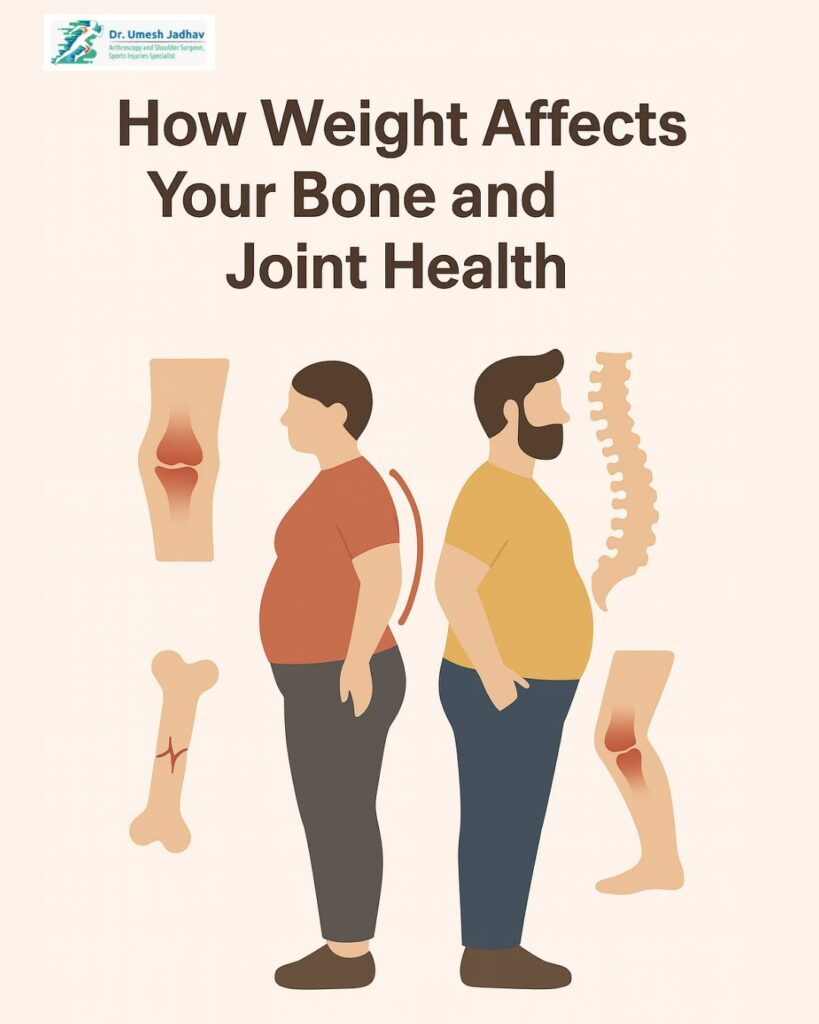
Maintaining a healthy weight is not just about how you look—it plays a major role in how your bones and joints function every day. Your body carries your weight with every step, bend, and movement. When the weight increases, the stress on bones and joints increases too, which can lead to long-term orthopedic problems. Maintaining a healthy weight is essential for strong bones and joint health, especially after age 40. With a balanced diet and regular exercise, you can protect your bone strength and mobility. In this blog, we will understand why weight management matters and how it helps in maintaining overall bone and joint health.
1. Extra Weight = Extra Pressure on Joints
Your knees, hips, and ankles support your entire body weight.
When weight increases, these joints have to work harder.
-
Every 1 kg of extra weight puts nearly 4 kg of extra pressure on your knees.
-
This can lead to faster wear and tear of cartilage.
-
People who are overweight are at higher risk of developing osteoarthritis.
2. Increases Risk of Back Pain
Excess weight—especially around the abdomen—pulls your spine forward.
This affects posture and strains the lower back muscles.
Common problems include:
-
Lower back pain
-
Disc issues
-
Poor posture
-
Muscle stiffness
3. Weakens Bone Strength
Being overweight often comes with:
-
Poor diet
-
Low activity
-
Vitamin D deficiency
All of these reduce bone strength and increase the risk of:
-
Fractures
-
Early degeneration
-
Osteoporosis (especially in women)
4. Inflammation Increases
Excess body fat produces inflammatory chemicals in the body.
These can:
-
Increase joint pain
-
Slow healing after injury
-
Worsen arthritis symptoms
5. Reduces Mobility
More weight makes movement difficult and painful.
This leads to:
-
Reduced activity level
-
Stiffer joints
-
Muscle weakness
-
Higher injury risk
It becomes a cycle: pain → less activity → more weight gain → more pain.
6. Benefits of Maintaining Healthy Weight
Losing even 5–10% of body weight can make a big difference.
Benefits include:
-
Reduced knee and joint pain
-
Better flexibility
-
Lower risk of arthritis
-
Improved posture
-
Stronger bones
-
Better overall mobility
7. Simple Tips for Better Bone & Joint Health
-
Include calcium and vitamin D–rich foods
-
Maintain a healthy weight
-
Walk or exercise daily
-
Avoid long sitting hours
-
Keep your posture correct
-
Stay hydrated
-
Do strengthening and stretching exercises
Conclusion
Your bones and joints support you through every movement in your daily life. Maintaining a healthy weight is one of the simplest and most effective ways to keep them strong, flexible, and pain-free. If you’re experiencing persistent knee, back, shoulder, or joint pain, consult Dr. Umesh Jadhav — the best orthopedic doctor and surgeon in Nigdi PCMC, who provides effective and advanced treatment for all bone and joint–related issues.
If you experience persistent knee, back, or joint pain, consult an orthopedic specialist for early evaluation and treatment.