
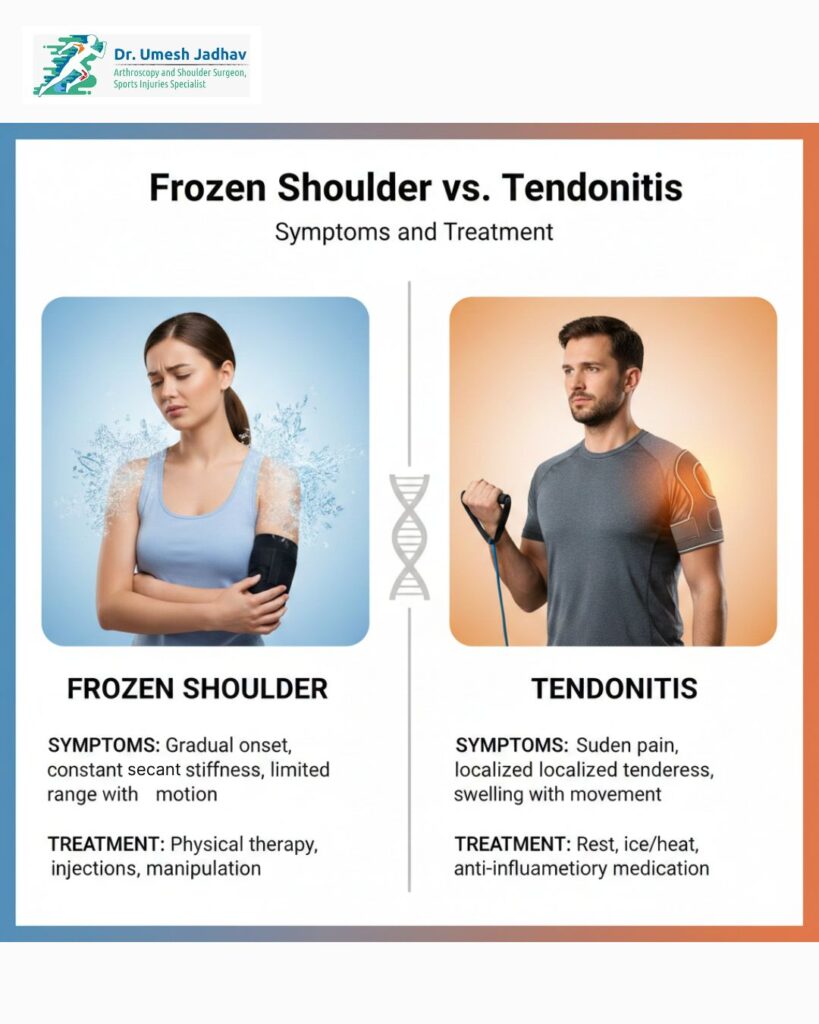
Shoulder pain is a common complaint that can interfere with daily activities such as dressing, reaching overhead, or sleeping comfortably. Two frequent causes of persistent shoulder pain are frozen shoulder and shoulder tendonitis. While both conditions affect shoulder movement and comfort, they are very different in terms of cause, progression, and treatment. Early evaluation by an orthopedic or shoulder specialist is essential for proper management. Dr. Umesh Jadhav, an experienced orthopaedic, offers patient-focused care to restore mobility and comfort.
Understanding these differences can help patients seek timely care and choose the right treatment approach.
What Is Frozen Shoulder?
Frozen shoulder, medically known as adhesive capsulitis, is a condition characterized by progressive stiffness and loss of shoulder movement. It develops when the connective tissue surrounding the shoulder joint becomes thickened, tight, and inflamed.
Frozen shoulder often develops gradually and may last for months or even years if left untreated.
Common Symptoms of Frozen Shoulder
-
Gradual onset of shoulder stiffness
-
Significant limitation in both active and passive range of motion
-
Pain that may worsen at night
-
Difficulty performing routine activities like combing hair or reaching behind the back
Frozen shoulder typically progresses through three stages:
-
Freezing stage – Increasing pain and stiffness
-
Frozen stage – Pain may reduce, but stiffness remains severe
-
Thawing stage – Gradual improvement in mobility
What Is Shoulder Tendonitis?
Shoulder tendonitis refers to inflammation or irritation of the shoulder tendons, most commonly the rotator cuff tendons. It is often caused by overuse, repetitive movements, or sudden strain.
Unlike frozen shoulder, tendonitis usually affects movement due to pain rather than joint stiffness.
Common Symptoms of Shoulder Tendonitis
-
Localized shoulder pain, especially with movement
-
Pain during overhead activities or lifting
-
Tenderness around the shoulder
-
Mild to moderate limitation of movement
-
Pain that improves with rest
Tendonitis can be acute (short-term) or chronic if repetitive strain continues.
Key Differences Between Frozen Shoulder and Tendonitis
| Feature | Frozen Shoulder | Shoulder Tendonitis |
|---|---|---|
| Primary issue | Joint capsule stiffness | Tendon inflammation |
| Onset | Gradual | Often sudden or activity-related |
| Range of motion | Severely restricted (even with assistance) | Limited mainly due to pain |
| Pain pattern | Constant stiffness with pain | Activity-related pain |
| Recovery time | Months to years | Weeks to months |
Causes and Risk Factors:
Frozen Shoulder
-
Prolonged shoulder immobility (after surgery or injury)
-
Diabetes
-
Thyroid disorders
-
Age between 40–60 years
-
Previous shoulder injury
Shoulder Tendonitis
-
Repetitive overhead movements
-
Sports activities (tennis, swimming, weightlifting)
-
Poor posture
-
Sudden increase in physical activity
-
Occupational strain
How These Conditions Are Diagnosed
Diagnosis typically involves:
-
A detailed medical history
-
Physical examination to assess range of motion and pain patterns
-
Imaging studies such as X-rays or MRI to rule out other conditions
Frozen shoulder is often diagnosed clinically based on restricted movement, while tendonitis may show tendon inflammation on imaging.
Treatment Options for Frozen Shoulder
Treatment focuses on restoring mobility and reducing stiffness and may include:
-
Physical therapy to improve range of motion
-
Anti-inflammatory medications
-
Corticosteroid injections to reduce inflammation
-
Joint stretching and mobilization techniques
-
In severe cases, minimally invasive procedures or surgery
Recovery can be slow, but consistent therapy significantly improves outcomes.
Treatment Options for Shoulder Tendonitis
Treatment for tendonitis aims to reduce inflammation and allow tendon healing:
-
Rest and activity modification
-
Ice therapy and anti-inflammatory medications
-
Physical therapy for strengthening and flexibility
-
Posture correction
-
Corticosteroid injections if pain persists
When to See a Shoulder Specialist:
You should consult a healthcare professional if:
- Shoulder pain persists beyond a few weeks
- Movement becomes increasingly restricted
- Pain interferes with sleep or daily activities
- There is no improvement with rest or home care
Early evaluation helps prevent long-term stiffness and complications.
Final Thoughts
While frozen shoulder and shoulder tendonitis may present with similar symptoms, they are distinct conditions that require different treatment approaches. Accurate diagnosis and timely medical care play a crucial role in achieving effective recovery and preventing long-term complications.
If shoulder pain or stiffness is affecting your quality of life, consulting an experienced specialist can help restore movement, comfort, and confidence. Dr. Umesh Jadhav, a shoulder specialist and orthopedic surgeon in Nigdi, PCMC, provides comprehensive care for frozen shoulder, tendonitis, shoulder and knee conditions, and a wide range of musculoskeletal disorders. With a patient-centered approach and evidence-based treatment, he supports individuals in returning to an active and pain-free life.
Call to book your appointment or visit website for more information.