
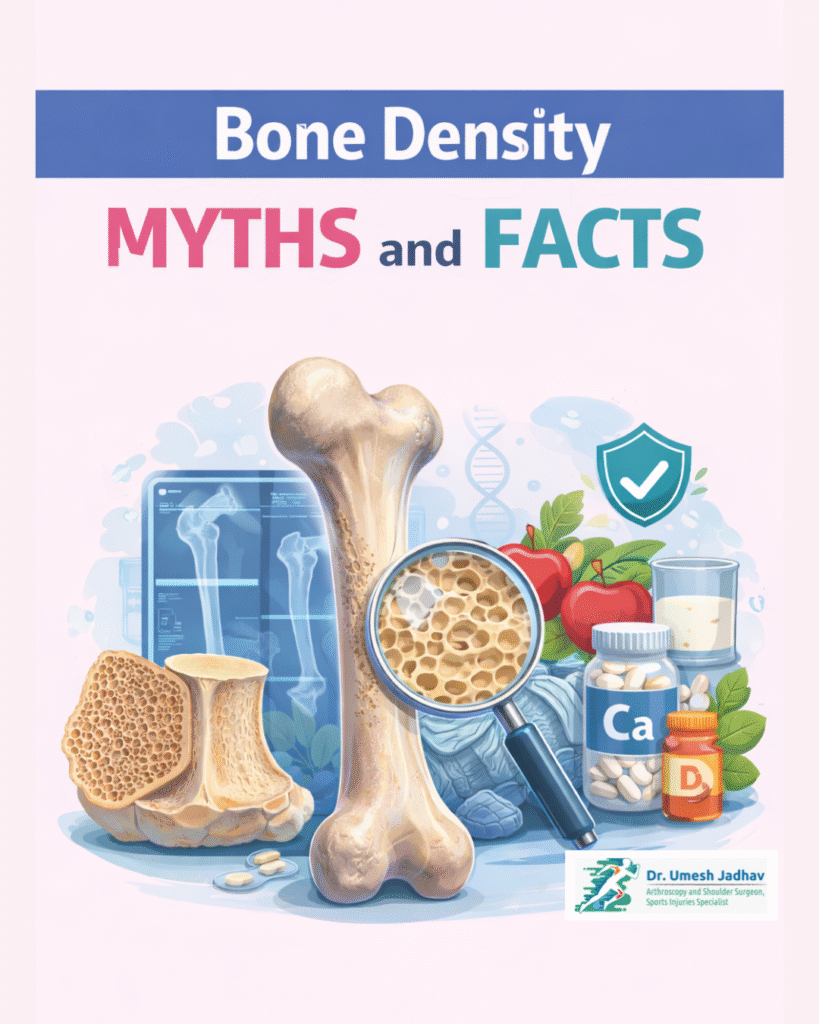
Bone density is a key indicator of bone strength, yet it is often misunderstood. Many people believe common myths about bone density that can lead to delayed diagnosis or unnecessary fear. Understanding the facts about bone density helps in preventing fractures and maintaining long-term bone health.
You should consider consulting an orthopedic doctor near you, if your bone density score is low, if you have had a fracture after a minor fall, ongoing bone or joint pain, or if you are above 50 years, postmenopausal, or have risk factors like vitamin D deficiency or long-term medication use. Early consultation helps protect bone strength and prevent future fractures.
What Is Bone Density?
Bone density refers to the amount of minerals present in your bones. Higher bone density means stronger bones, while low bone density increases the risk of fractures. Bone density is commonly measured using a DEXA scan, which helps assess fracture risk and detect conditions like osteopenia and osteoporosis.
Common Bone Density Myths vs Facts:
Myth 1: Low Bone Density Always Causes Fractures
Fact:
Low bone density increases fracture risk; however, fractures also depend on muscle strength, balance, physical activity, and fall risk. In fact, many people with low bone density never experience fractures when they follow proper preventive measures.
Myth 2: Bone Density Problems Occur Only in Older Adults
Fact:
Bone density loss can begin earlier due to poor nutrition, vitamin D deficiency, lack of exercise, hormonal changes, or certain medical conditions. Early screening is important for people with risk factors.
Myth 3: Bone Density Cannot Be Improved
Fact:
However Bone density can often be maintained or improved through weight-bearing exercises, strength training, proper nutrition, and adequate calcium and vitamin D intake. Additionally, regular medical guidance supports better long-term bone health.
Myth 4: Only Women Are Affected by Low Bone Density
Fact:
Men also face the risk of low bone density and osteoporosis, especially as they age. Moreover, lifestyle factors such as smoking, alcohol use, and chronic illnesses further increase this risk.
Myth 5: A Normal Bone Density Score Means No Fracture Risk
Fact:
A normal bone density score does not eliminate fracture risk. For example, poor balance, weak muscles, and frequent falls can still lead to fractures even when bone density appears normal.
Myth 6: Bone Density Tests Are Needed Only After a Fracture
Fact:
Doctors use bone density tests to identify bone loss early—before fractures occur. As a result, early testing helps reduce future fracture risk and supports timely preventive care.
| Myth | Fact |
|---|---|
| Low bone density always causes fractures | Low bone density increases risk, but fractures also depend on balance, muscle strength, and fall risk |
| Bone density problems affect only older people | Bone loss can start early due to poor diet, inactivity, vitamin D deficiency, or hormonal issues |
| Bone density cannot be improved | With proper exercise, nutrition, and medical care, bone strength can be maintained or improved |
| Only women need to worry about bone density | Men are also at risk, especially with age and lifestyle factors |
| Normal bone density means zero fracture risk | Even normal bone density doesn’t fully eliminate fracture risk |
| Bone density tests are needed only after fractures | Early testing helps prevent fractures before they happen |
Why Bone Density Awareness Is Important
Understanding bone density myths and facts helps people:
-
Take early preventive action
-
Reduce fracture risk
-
Maintain mobility and independence
-
Detect osteoporosis at an early stage
Bone density is generally an important part of bone health, but it should be evaluated along with lifestyle, physical activity, and overall health.
When to Consult an Orthopedic Doctor?
You should consult an orthopaedic doctor if you:
-
Have a low bone density or osteoporosis diagnosis
-
Experience fractures after minor falls
-
Have persistent bone or back pain
-
Are postmenopausal or above 50 years
-
Have a family history of osteoporosis
-
Take long-term steroids or other bone-affecting medications
Early consultation helps prevent complications and supports better bone strength management.
Final Thoughts
Bone density myths often confuse people; however, understanding the facts helps you actively protect your bone health. Moreover, regular screening, healthy lifestyle choices, and timely medical consultation play a crucial role in preventing fractures. As a result, consulting an experienced orthopaedic Dr. Umesh Jadhav in Nigdi PCMC, helps ensure early diagnosis, personalized treatment, and long-term bone health—supporting strong bones and sustained mobility throughout life.
Book Your Consultation Today!