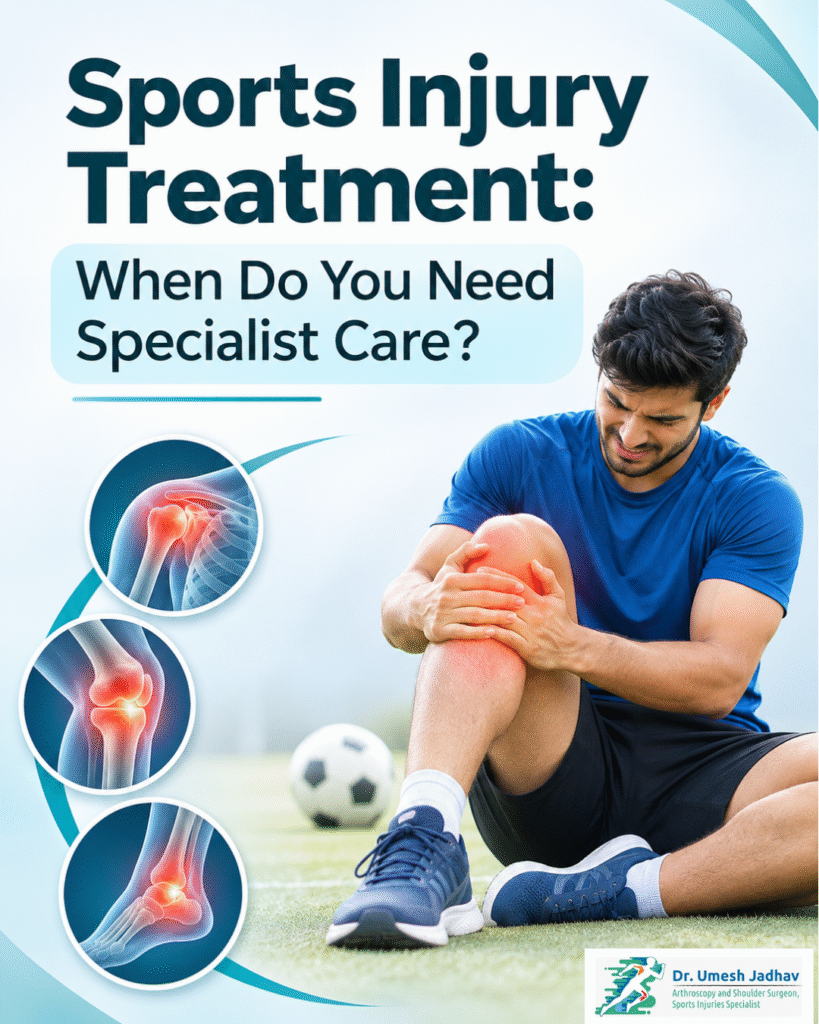
Sports injuries are not limited to professional athletes. They can happen while playing cricket, football, badminton, running, cycling, lifting weights, or even exercising at home. A sudden twist, awkward landing, or repetitive movement can injure muscles, ligaments, tendons, or joints.
Some minor injuries improve with rest and appropriate home care. However, persistent pain, swelling, joint instability, or difficulty moving may indicate a more serious problem that requires medical attention.
When should you see a sports injury specialist? You should seek professional evaluation if an injury causes significant swelling, difficulty bearing weight, reduced movement, or symptoms that persist or worsen despite initial care. Severe pain, visible deformity, or numbness requires urgent assessment.
Understanding these warning signs can help you make informed decisions about treatment and recovery.
What Are the Most Common Sports Injuries?
Sports injuries can affect different parts of the body depending on the activity, movement, and level of physical stress involved.
1. Ligament Sprains
A ligament connects one bone to another and helps stabilize a joint. Sudden twisting or overstretching can injure these structures.
Ankle and knee sprains are particularly common during running, jumping, and sports involving rapid changes in direction.
2. Muscle Strains
Muscle strains occur when muscle fibers or their attached tendons are overstretched or torn.
They commonly affect the hamstrings, calves, thighs, and shoulders. Symptoms may include sudden pain, tenderness, weakness, swelling, or muscle spasms.
3. ACL Injuries
The anterior cruciate ligament (ACL) helps maintain knee stability.
An ACL injury may occur during sudden turns, awkward landings, or rapid changes in direction. Some patients experience a popping sensation, rapid swelling, and a feeling that the knee may give way.
4. Shoulder Injuries
Shoulder problems can develop during throwing, weightlifting, swimming, or repetitive overhead movements.
Common conditions include rotator cuff injuries, shoulder instability, and tendon-related problems.
5. Tendon Injuries
Tendons connect muscles to bones. Repeated physical stress can cause tendon pain and reduced function.
Examples include Achilles tendinopathy, patellar tendinopathy, and tennis elbow.
These conditions may develop gradually rather than following a single injury.
When Should You Consult a Sports Injury Specialist?
Not every injury requires specialist treatment. However, certain symptoms suggest that further examination may be necessary.
Pain That Does Not Improve
Mild soreness after exercise may settle with rest. However, pain that continues for several days, repeatedly returns during activity, or becomes progressively worse should be evaluated.
Persistent Swelling
Swelling after an injury can indicate inflammation or damage to surrounding tissues.
Significant swelling, particularly after a sudden injury, may be associated with ligament tears, fractures, or other structural problems.
Joint Instability
If your knee, ankle, or shoulder feels unstable, slips unexpectedly, or gives way during movement, there may be damage to the structures supporting the joint.
Continuing to participate in sports without assessment may increase the risk of further injury.
Difficulty Walking or Moving
An injury that prevents you from walking normally, lifting your arm, bending a joint, or performing routine activities requires attention.
Inability to bear weight, severe pain, or obvious deformity should prompt urgent medical evaluation.
Repeated Injuries
Repeated ankle sprains, recurring knee pain, or shoulder discomfort during sports can indicate an unresolved problem. A sports medicine doctor can assess joint stability, movement patterns, strength, and other factors contributing to repeated injuries.
According to the National Institute of Arthritis and Musculoskeletal and Skin Diseases (NIAMS), persistent symptoms, significant swelling, inability to bear weight, and visible deformity are important reasons to seek medical care.
What Should You Do Immediately After a Sports Injury?
The first steps following an injury can help protect the affected area.
For a minor soft-tissue injury, initial care may include:
-
Protection and relative rest: Stop the activity causing pain and avoid movements that may worsen the injury.
-
Cold application: Apply an ice pack wrapped in a towel for approximately 15–20 minutes at a time.
-
Compression: Use a suitable elastic bandage to help manage swelling, without wrapping it too tightly.
-
Elevation: Raise the injured limb when practical to help reduce swelling.
Avoid attempting to push through significant pain or returning immediately to strenuous exercise.
Seek emergency care for severe or rapidly increasing pain, a visibly deformed limb, loss of sensation, a cold or discolored extremity, or a suspected serious fracture.
How Are Sports Injuries Diagnosed?
Accurate diagnosis begins with understanding how the injury occurred and which movements trigger symptoms. An orthopedic or sports injury specialist may assess joint movement, tenderness, swelling, muscle strength, and stability. Depending on the findings, investigations may include:
- X-rays: To identify fractures and certain bone-related problems.
- MRI scans: To evaluate soft-tissue structures such as ligaments, tendons, cartilage, and muscles.
- Ultrasound: To assess selected tendon and muscle injuries.
Not every patient requires imaging. The choice of investigation depends on the symptoms, examination findings, and suspected injury.
What Are the Treatment Options for Sports Injuries?
Treatment depends on the type of injury, severity, physical demands, and individual recovery goals.
Non-Surgical Treatment
Many sports injuries can be managed without surgery.
Treatment may involve activity modification, appropriate medication, short-term bracing, physiotherapy, and progressive strengthening exercises.
Physiotherapy is particularly important for restoring flexibility, muscle strength, balance, and joint control.
The goal is not simply to reduce pain but also to restore safe movement and lower the risk of reinjury.
Arthroscopic Surgery
Certain ligament, cartilage, and shoulder injuries may require surgical treatment when clinically indicated.
Arthroscopy is a minimally invasive surgical technique that allows surgeons to examine and treat selected joint problems using a camera and specialized instruments inserted through small incisions.
However, not every ligament tear or sports-related joint injury requires surgery. The decision depends on the injury, symptoms, instability, activity requirements, and response to nonsurgical treatment.
Rehabilitation and Return to Sports
Recovery does not end when pain improves. A structured rehabilitation program may include restoring movement, strengthening affected muscles, improving balance, and gradually reintroducing sport-specific activities. Returning to sports before adequate recovery can increase the likelihood of further injury. The timing should be based on functional recovery and medical guidance rather than a fixed number of days.
How Can You Reduce the Risk of Sports Injuries?
Although not every sports injury can be prevented, certain habits can lower the risk.
-
Warm up appropriately before physical activity.
-
Increase training intensity gradually.
-
Include strength, flexibility, and balance exercises.
-
Use suitable footwear and sports equipment.
-
Allow adequate recovery between demanding sessions.
-
Avoid continuing activities that repeatedly cause pain.
Maintaining good technique and addressing recurring discomfort early may also help reduce preventable injuries.
Frequently Asked Questions
1. Can a sports injury heal without surgery?
Yes. Many muscle strains, ligament sprains, and overuse injuries improve with appropriate nonsurgical treatment and rehabilitation. However, severe tears, fractures, or unstable joints may require additional intervention.
2. How do I know if my sports injury is serious?
Severe pain, rapid swelling, inability to bear weight, obvious deformity, numbness, or marked joint instability may indicate a significant injury. These symptoms require prompt medical evaluation.
3. Can I continue exercising with a sports injury?
It depends on the injury. Activities that worsen pain or place additional stress on damaged tissues should be avoided. A healthcare professional can help determine which movements are safe during recovery.
Conclusion
Sports injuries should not be ignored simply because the pain initially seems manageable. Persistent discomfort, repeated swelling, weakness, or joint instability may indicate an underlying problem requiring medical attention.
Early assessment can help identify the cause, determine suitable treatment options, and support a safer return to physical activity.
For individuals seeking a Sports Medicine Specialist in Nigdi, PCMC, consult Dr. Umesh Jadhav, an experienced orthopedic surgeon providing specialized care for shoulder, knee, and joint conditions, along with sports injury rehabilitation. So why wait? Click here to book your appointment.
This article is for patient education and does not replace a clinical examination or individualized medical advice.