
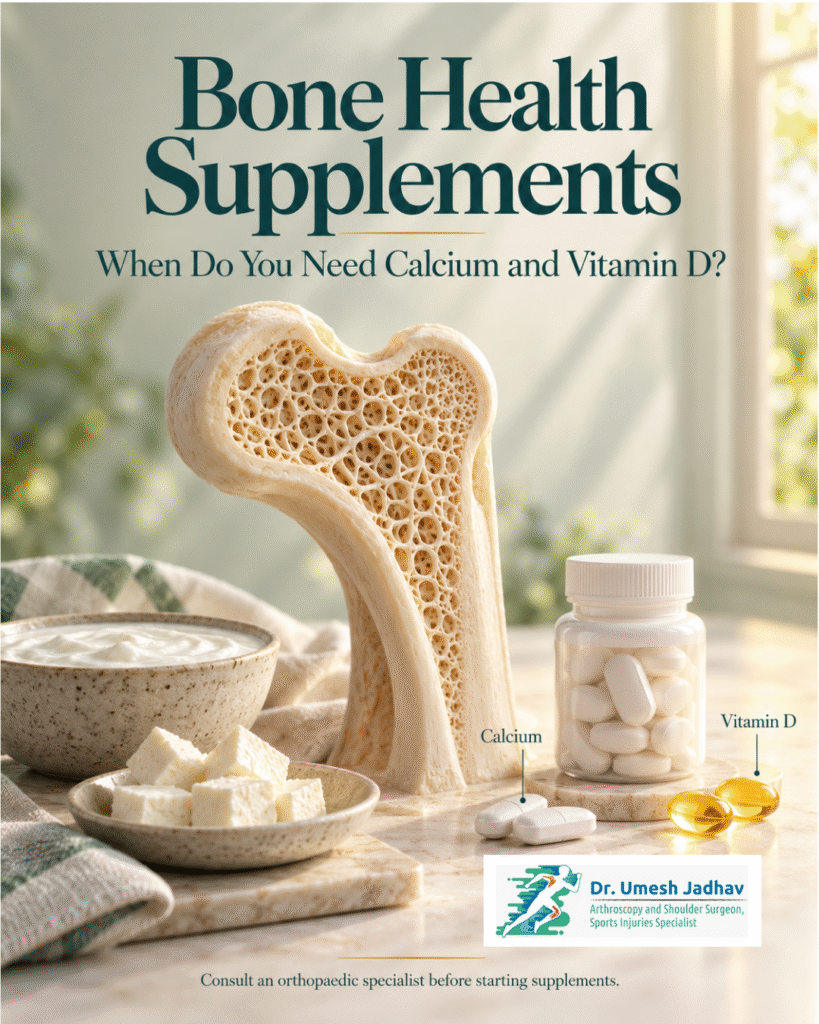
Calcium and vitamin D supplements may be needed when your diet does not provide enough calcium, you have vitamin D deficiency, or your doctor recommends them as part of a bone health treatment plan. Everyone needs these nutrients, but everyone does not need a daily supplement.
Before starting supplements, understand what your bones need, how much calcium and vitamin D your diet provides, and whether you are at risk of bone loss. Consult an orthopaedic specialist for personalised guidance rather than self medicating.
Why Are Calcium and Vitamin D Important for Bones?
Calcium helps give bones their structure and strength. Your body also uses it for muscle movement and nerve function. When calcium intake stays too low, the body can draw calcium from bones.
Vitamin D helps your body absorb calcium and supports normal muscle function. Getting enough of both nutrients is an important part of maintaining strong bones throughout life.
Does Everyone Need Bone Health Supplements?
No. Supplements help fill a nutritional gap; they are not automatically necessary simply because you reach a certain age.
A doctor may consider supplementation if you:
- Eat very few calcium rich foods.
- Have a diagnosed vitamin D deficiency.
- Have a condition that affects nutrient absorption.
- Have osteoporosis or a previous fracture from a minor fall.
- Take medicines that can affect bone health.
The decision depends on your diet, medical history, medicines and fracture risk. Calcium and vitamin D can support osteoporosis care, but they may not replace medicines prescribed to reduce fracture risk.
Can You Get Enough Calcium From Food?
For many people, food can provide much or all of their calcium needs. Useful options include:
- Milk, curd and paneer.
- Calcium fortified plant drinks.
- Tofu made with calcium salts.
- Certain green vegetables, such as kale and broccoli.
Check labels on fortified products because calcium content varies. If you avoid dairy, review your usual meals before assuming that a supplement is your only option.
A calcium supplement should generally cover the shortfall in your diet. It does not need to supply your entire daily requirement if food already provides a substantial amount.
How Much Calcium and Vitamin D Do Adults Need?
Commonly used NIH reference amounts are shown below. These are total daily intake targets, including food and supplements, rather than a prescription for tablets.
| Adult group | Calcium per day | Vitamin D per day |
|---|---|---|
| Ages 19 to 50 | 1,000 mg | 600 IU |
| Women aged 51 to 70 | 1,200 mg | 600 IU |
| Men aged 51 to 70 | 1,000 mg | 600 IU |
| Adults over 70 | 1,200 mg | 800 IU |
Individual requirements and local recommendations can differ. Treatment for a confirmed deficiency may involve a different dose for a specified period under medical supervision. Consumer
Is Sunlight Enough for Vitamin D?
Sunlight helps your skin produce vitamin D, but the amount varies with skin pigmentation, clothing, season, age and time spent outdoors. There is no single sunlight duration that reliably meets everyone’s needs.
Food sources include fatty fish, egg yolks and fortified foods. For vegetarians, fortified products can be useful, although obtaining enough vitamin D from food alone may be difficult. A doctor can assess whether supplementation is appropriate.
Can Too Much Calcium or Vitamin D Be Harmful?
Yes. Taking more does not necessarily make your bones stronger.
Calcium supplements can cause constipation or bloating, and excessive supplemental calcium may increase kidney stone risk in some people. Too much vitamin D can raise blood calcium to harmful levels and damage the kidneys.
Check the ingredients in all your supplements to avoid doubling up. Tell your doctor if you have kidney disease, a history of kidney stones or take regular medicines, as these can affect supplement choices.
What Else Helps Keep Bones Strong?
Bone health depends on more than calcium tablets. Regular weight bearing activity, suitable strength training, adequate protein and avoiding smoking all support bone care. Balance exercises can also help reduce falls.
If you have osteoporosis or a previous fracture, ask which exercises are suitable before beginning a new routine.
Frequently Asked Questions
Can calcium and vitamin D prevent every fracture?
No. Their benefits depend on nutritional status and individual risk. Supplements do not guarantee fracture prevention, particularly in otherwise healthy adults who already have adequate intake.
Does bone pain mean I need calcium tablets?
Bone pain alone cannot identify a calcium or vitamin D deficiency. Persistent pain needs assessment rather than self treatment with supplements. Severe vitamin D deficiency can affect bones, but other conditions can cause similar symptoms.
Should I take supplements after menopause?
Menopause increases the risk of bone loss, but supplements should reflect your dietary intake and individual needs. A bone health assessment can help determine whether you need supplements, a bone density test or other treatment.
Speak with your orthopedic doctor about your diet and bone health before choosing a calcium or vitamin D supplement.