
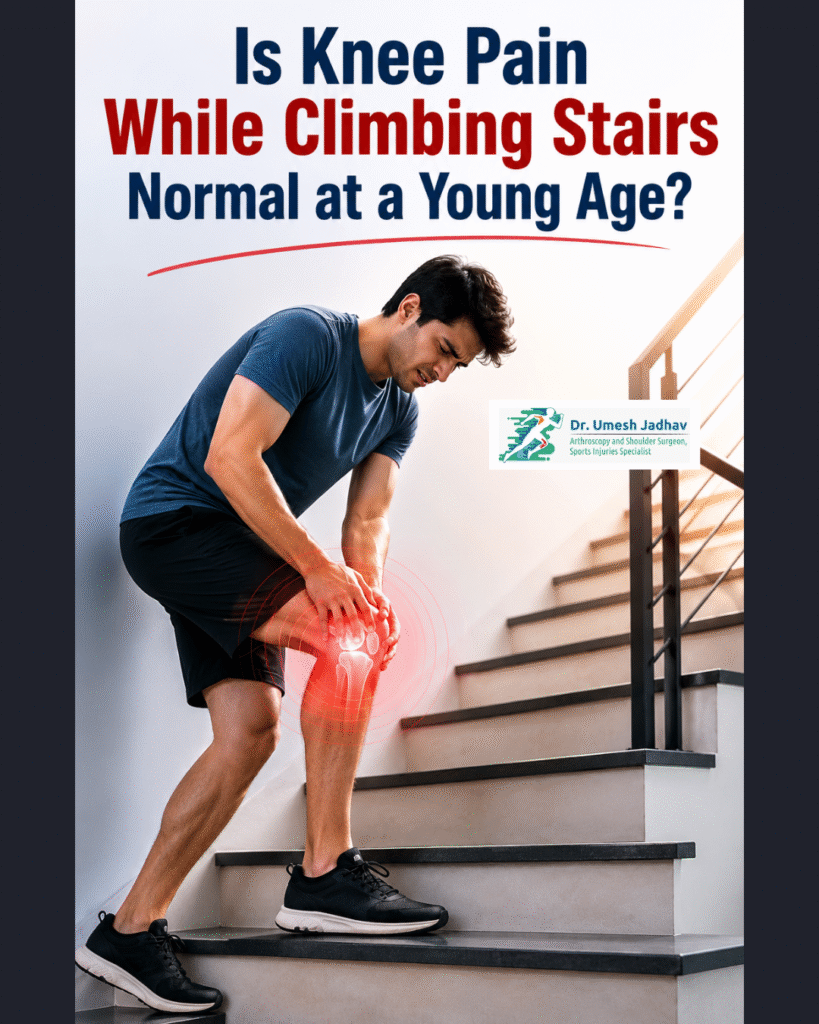
Knee pain is often associated with aging, but many teenagers and young adults also experience discomfort while climbing stairs. If your knee hurts every time you go upstairs or downstairs, it is important not to ignore it.
Occasional soreness after intense physical activity may be normal, but persistent knee pain while climbing stairs is not considered normal in young individuals. It may indicate a ligament injury, patellofemoral pain syndrome, muscle imbalance, cartilage damage, or another underlying knee condition that requires timely evaluation.
Don’t wait for knee pain to interfere with your mobility and quality of life. Consult an experienced Orthopedic Doctor near you to determine the underlying cause and receive the right treatment before the condition progresses.
Why Does Knee Pain Occur While Climbing Stairs?
Climbing stairs places greater pressure on the knee joint than walking on flat ground. Every step requires your knee to bend and support several times your body weight. If any part of the joint—such as the cartilage, ligaments, tendons, or kneecap—is irritated or injured, you may experience pain during this movement.
Common Causes of Knee Pain in Young Adults
1. Patellofemoral Pain Syndrome (Runner’s Knee)
One of the most common causes of knee pain in young adults is patellofemoral pain syndrome. It occurs when the kneecap does not move smoothly over the thigh bone, causing pain around or behind the kneecap.
Symptoms include:
- Pain while climbing or descending stairs
- Pain after sitting for long periods
- Discomfort during running or squatting
- Clicking or grinding sensation in the knee
2. Patellar Tendinitis (Jumper’s Knee)
Repeated jumping, running, or sports activities can inflame the patellar tendon, leading to pain just below the kneecap.
3. Meniscus Injury
The meniscus is a cushion-like cartilage that absorbs shock within the knee. Twisting injuries during sports or exercise can tear the meniscus.
Symptoms may include:
- Pain while climbing stairs
- Swelling
- Knee locking or catching
- Difficulty bending the knee
4. Ligament Injuries
Injuries to the ACL, PCL, MCL, or LCL are common in athletes and active individuals. These injuries can cause pain, instability, and difficulty using stairs.
5. Muscle Weakness or Imbalance
Weak quadriceps, hamstrings, or hip muscles reduce knee stability and increase stress on the joint during movement.
6. Cartilage Damage
Damage to the cartilage covering the bones may cause pain, stiffness, and a grinding sensation while climbing stairs.
7. Overuse Injuries
Frequent gym workouts, running, cycling, or playing sports without adequate recovery can strain the knee joint and surrounding tissues.
Symptoms That Should Not Be Ignored
Consult an orthopedic specialist if you experience:
- Persistent knee pain lasting more than a few days
- Swelling around the knee
- Difficulty climbing or descending stairs
- Knee instability or giving way
- Locking or inability to fully bend the knee
- Clicking or popping associated with pain
- Redness, warmth, or fever
How Is Knee Pain Diagnosed?
Your doctor may recommend:
- Physical examination
- X-rays to evaluate the bones
- MRI scan to detect ligament, tendon, or cartilage injuries
- Assessment of your walking pattern and muscle strength
An accurate diagnosis helps determine the most effective treatment plan.
Treatment Options
Treatment depends on the underlying cause and severity of the condition.
Conservative Treatment
- Rest from activities that worsen the pain
- Ice packs to reduce swelling
- Compression and elevation if swelling is present
- Anti-inflammatory medications as prescribed
- Physiotherapy to strengthen the knee and surrounding muscles
- Activity modification and gradual return to exercise
Advanced Treatment
If conservative treatment does not provide relief, your orthopedic doctor may recommend:
- Platelet-rich plasma (PRP) injections in selected cases
- Arthroscopic surgery for cartilage or meniscus injuries
- Ligament reconstruction for severe ligament tears
Can Knee Pain Be Prevented?
Yes. Many knee problems can be prevented with healthy habits.
- Warm up before exercise.
- Strengthen your quadriceps, hamstrings, and hip muscles.
- Wear supportive footwear.
- Avoid sudden increases in workout intensity.
- Maintain a healthy body weight.
- Use proper techniques during sports and gym exercises.
- Stretch regularly to improve flexibility.
When Should You See an Orthopedic Doctor?
Seek medical advice if:
- Knee pain continues despite rest.
- The pain interferes with daily activities.
- Your knee feels unstable.
- You notice swelling or repeated episodes of pain.
- You have difficulty climbing stairs regularly.
Early diagnosis and treatment can prevent minor problems from becoming long-term joint conditions.
Final Thoughts
Knee pain while climbing stairs at a young age should not be ignored. Although it is often caused by overuse, muscle weakness, or sports-related injuries, persistent pain may indicate conditions such as patellofemoral pain syndrome, tendon injuries, ligament tears, or cartilage damage.
If your symptoms persist or worsen, consult Dr. Umesh Jadhav, an experienced Orthopedic Doctor in Nigdi, PCMC, specializes in the diagnosis and treatment of knee injuries, sports injuries, and arthroscopic procedures. Visit our clinic for a comprehensive knee assessment and personalized treatment plan to get back to pain-free movement with confidence.