
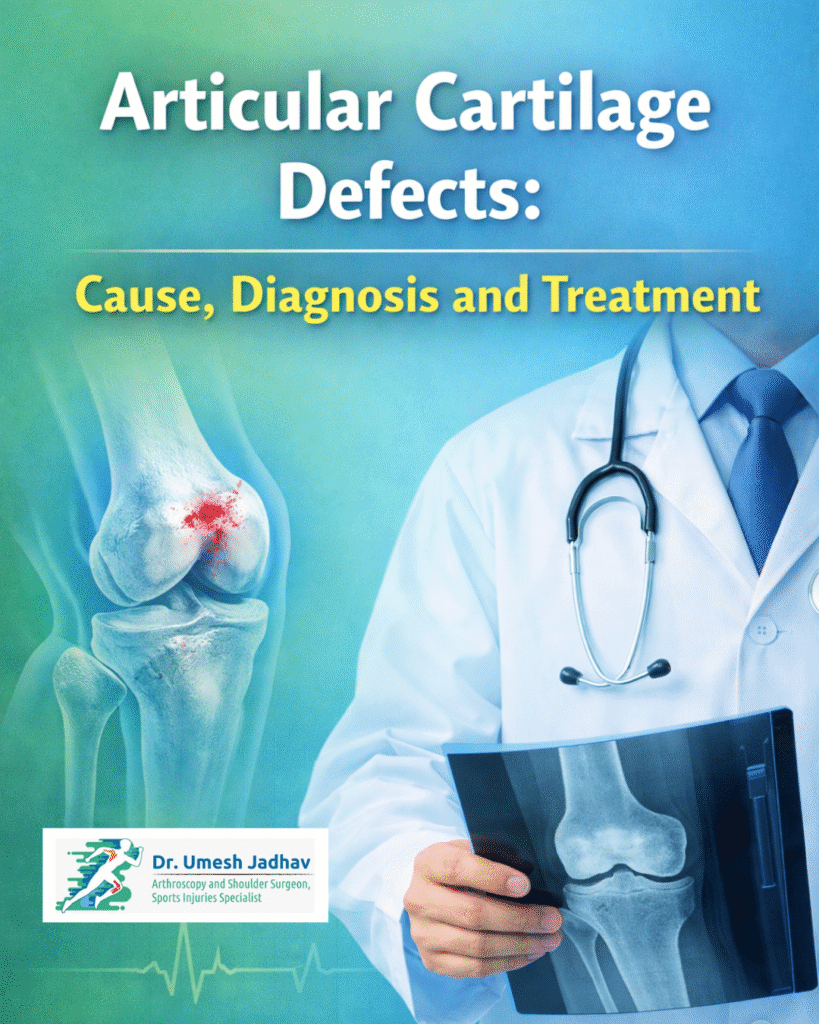
Articular cartilage is a specialized hyaline tissue that provides a smooth, low-friction surface for joint articulation and facilitates load distribution. Defects in this cartilage represent a significant clinical concern due to its limited intrinsic healing capacity. If left untreated, these lesions may progress to degenerative conditions such as Osteoarthritis, resulting in chronic pain and functional impairment.
Early evaluation by an experienced orthopedic specialist is essential for accurate diagnosis and timely management. Consulting Dr. Umesh Jadhav, a trusted Orthopedic Doctor in Nigdi PCMC, can help identify cartilage damage at an early stage and guide appropriate treatment to prevent long-term joint complications.
What are Articular Cartilage Defects?
Articular cartilage defects refer to localized damage or loss of cartilage in a joint. Unlike other tissues, cartilage has limited healing capacity due to the absence of blood supply, making early diagnosis and management crucial.
These defects commonly occur in:
- Knee joint
- Shoulder joint
- Hip joint

Causes of Articular Cartilage Defects
Several factors can contribute to cartilage damage:
- Injury or Trauma: Sports injuries, falls, or accidents can lead to cartilage lesions
- Repetitive Stress: Continuous strain on joints due to physical activity or occupation
- Age-related Degeneration: Natural wear and tear over time
- Obesity: Excess weight increases pressure on weight-bearing joints
- Joint Instability: Ligament injuries causing uneven load distribution
Symptoms to Watch For
Patients with cartilage defects may experience:
- Persistent joint pain during activity
- Swelling and tenderness
- Stiffness, especially after rest
- Reduced range of motion
- Clicking or grinding sensation in the joint
Early symptoms are often mild but can worsen over time if ignored.
Diagnosis of Cartilage Defects
Accurate diagnosis involves a combination of:
- Clinical Examination: Assessment of pain, movement, and joint stability
- Imaging Tests:
- X-rays to evaluate joint space
- MRI for detailed cartilage assessment
- Arthroscopy: A minimally invasive procedure to directly visualize cartilage damage
Treatment Options
Treatment depends on the severity, location, and patient’s activity level.
1. Non-Surgical Management
- Rest and activity modification
- Physiotherapy to strengthen supporting muscles
- Medications for pain and inflammation
- Lifestyle changes including weight management
2. Minimally Invasive Procedures
- Arthroscopic debridement
- Microfracture technique to stimulate cartilage repair
3. Advanced Surgical Options
- Cartilage restoration procedures
- Joint preservation techniques
- Joint replacement in severe cases
Prevention and Joint Care
Preventive measures play a vital role in maintaining joint health:
- Maintain a healthy weight
- Engage in regular low-impact exercise
- Avoid excessive strain on joints
- Follow proper posture and ergonomics
Expert Care in Nigdi PCMC
For accurate diagnosis and advanced treatment of cartilage defects, consult Dr. Umesh Jadhav, best Orthopedic Doctor in Nigdi PCMC. With expertise in arthroscopy and joint preservation techniques, patients can expect personalized care, faster recovery, and improved mobility.
Conclusion
Articular cartilage defects are a significant cause of joint pain and dysfunction but can be effectively managed with early diagnosis and appropriate treatment. Seeking timely orthopedic consultation ensures better outcomes and helps maintain long-term joint health and mobility. For Cartilage degeneration treatment Book appointment today.