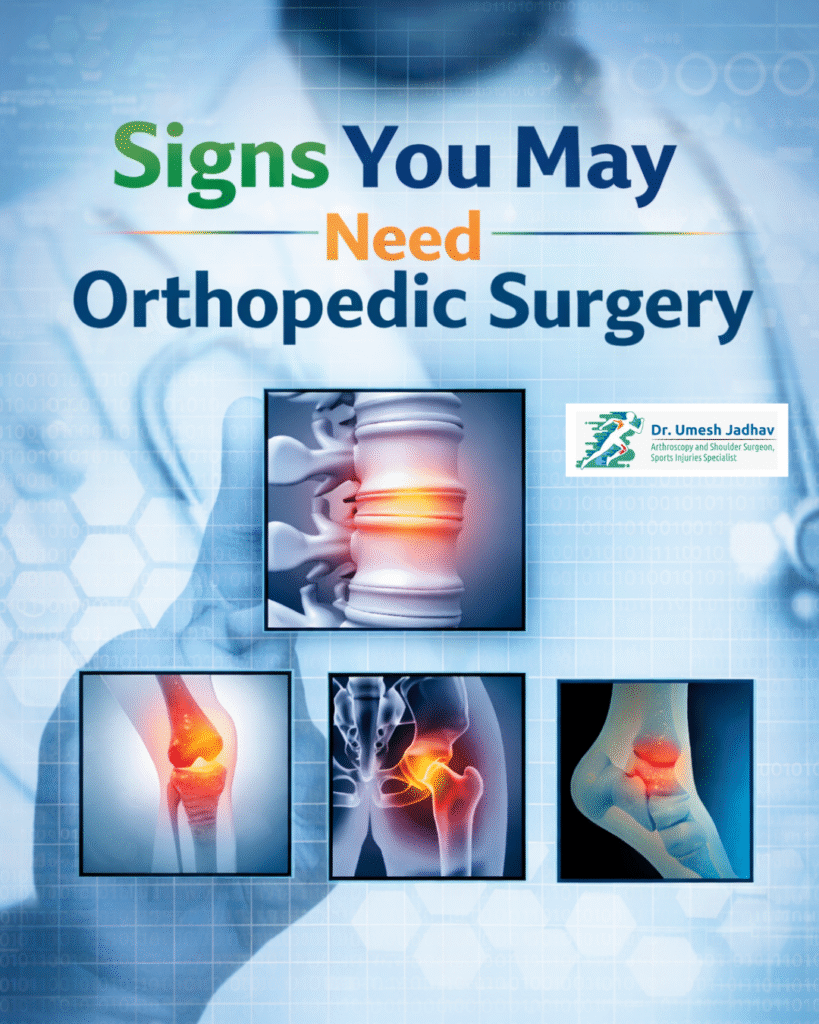
Orthopedic problems can start as mild discomfort but may gradually affect your mobility, independence, and quality of life. Many patients delay treatment, hoping the pain will resolve on its own. However, when conservative treatments such as medication, physiotherapy, or lifestyle changes fail, surgical intervention may become necessary.
Consulting an experienced orthopedic surgeon in Nigdi PCMC can help diagnose the root cause early and recommend the most appropriate treatment. Specialists like Dr. Umesh Jadhav evaluate patients across Pimpri‑Chinchwad with advanced orthopaedic conditions and guide them toward safe and effective recovery.
This article explains the 7 important signs that indicate you may need orthopaedic surgery.
1. Persistent Pain That Does Not Improve with Treatment
Pain lasting for weeks or months despite rest, medications, or physiotherapy may indicate a deeper structural issue.
This may be caused by:
-
Severe arthritis
-
Ligament tears
-
Cartilage damage
-
Joint degeneration
When pain becomes chronic and affects daily life, surgery may be required to correct the underlying problem.
2. Limited Range of Motion
If you find it difficult to bend, rotate, or fully use a joint, it could be due to:
-
Joint damage
-
Torn ligaments
-
Frozen shoulder
-
Severe inflammation
Restricted movement often indicates mechanical damage inside the joint that may require surgical correction.
3. Difficulty Performing Daily Activities
When simple tasks such as walking, climbing stairs, holding objects, or getting up from a chair become painful or difficult, it is a serious warning sign.
This commonly occurs in conditions like:
-
Advanced knee arthritis
-
Hip joint damage
-
Shoulder injuries
Orthopedic surgery can help restore mobility and improve independence.
4. Joint Instability
If your joint feels unstable, loose, or gives way suddenly, it may be due to ligament injury or structural damage.
Common examples include:
-
ACL tears in the knee
-
Shoulder dislocation
-
Ankle instability
Surgical repair helps restore joint stability and prevents further injury.
5. Severe Fractures or Injuries
Some fractures cannot heal properly with casting alone, especially if the bone is displaced or shattered.
Surgery may be required to:
-
Align bones properly
-
Stabilize with plates, screws, or rods
-
Ensure proper healing
Timely surgical intervention prevents long-term complications.
6. Progressive Joint Deformity
If a joint gradually becomes misshapen or misaligned, it may indicate severe arthritis or structural damage.
This can lead to:
-
Chronic pain
-
Reduced function
-
Permanent disability
Joint replacement surgery can restore alignment and function effectively.
7. Failure of Non-Surgical Treatments
Orthopedic surgeons always prefer conservative treatment first. However, surgery may be recommended when:
-
Physiotherapy does not provide relief
-
Medications fail to control symptoms
-
Injections offer only temporary improvement
-
Condition continues to worsen
Surgery addresses the root cause and provides long-term relief.
When Should You Consult an Orthopedic Surgeon in PCMC?
You should consult a specialist if you experience:
-
Persistent joint pain
-
Limited mobility
-
Difficulty walking or using limbs
-
Injury with swelling or instability
-
Pain affecting your daily activities
Early diagnosis improves treatment outcomes and may prevent major complications.
Modern Orthopedic Surgery is Safe and Effective
Advancements in orthopedic surgery now offer:
-
Minimally invasive techniques
-
Faster recovery
-
Less pain and smaller incisions
-
Improved success rates
With expert care and proper rehabilitation, most patients regain normal function and return to active life.
Conclusion
Ignoring orthopedic symptoms can lead to worsening pain, joint damage, and long-term disability. Recognizing early warning signs and consulting an experienced specialist like Dr. Umesh Jadhav in Nigdi, Pimpri-Chinchwad can help ensure timely diagnosis and the most appropriate treatment plan.
If you experience persistent pain, limited mobility, or joint instability, do not ignore these symptoms. Early evaluation by a qualified orthopedic surgeon can help identify the root cause and prevent further complications. With accurate diagnosis and the right treatment — whether surgical or non-surgical — you can restore your mobility, reduce pain, and return to an active, healthy life.